

What is Race Diversity in the Workplace?
Race Diversity in the Workplace refers to the presence, inclusion, and equitable treatment of individuals from varied racial and ethnic backgrounds within an organization. It ensures that people of all races have fair access to opportunities, representation, and leadership, without bias or discrimination. Beyond mere compliance, race diversity promotes richer collaboration, innovation, and understanding in a multicultural business landscape.
When workplaces reflect the diversity of society, they strengthen their social responsibility and competitiveness. Building race diversity requires deliberate strategies, transparent policies, and ongoing education to foster inclusive mindsets. It’s about creating environments where racial identity is respected, cultural differences are valued, and every individual’s potential is recognized and leveraged for mutual growth and success.
Main Components
The 8 Main Components of Race Diversity in the Workplace
Achieving race diversity in the workplace goes far beyond representation—it’s about building equitable systems, inclusive cultures, and long-term accountability. Organizations must identify and act across eight interconnected components that together define a sustainable and fair approach to race diversity. Each component strengthens a different dimension of inclusion, from leadership and culture to policy and data.
Collectively, they ensure that racial diversity is not an isolated initiative but an integrated part of business strategy, human resources, and community engagement. These components form the foundation for both measuring progress and embedding race equity into everyday practice. Understanding and developing each component allows leaders and employees alike to cultivate workplaces that are both socially responsible and high-performing.
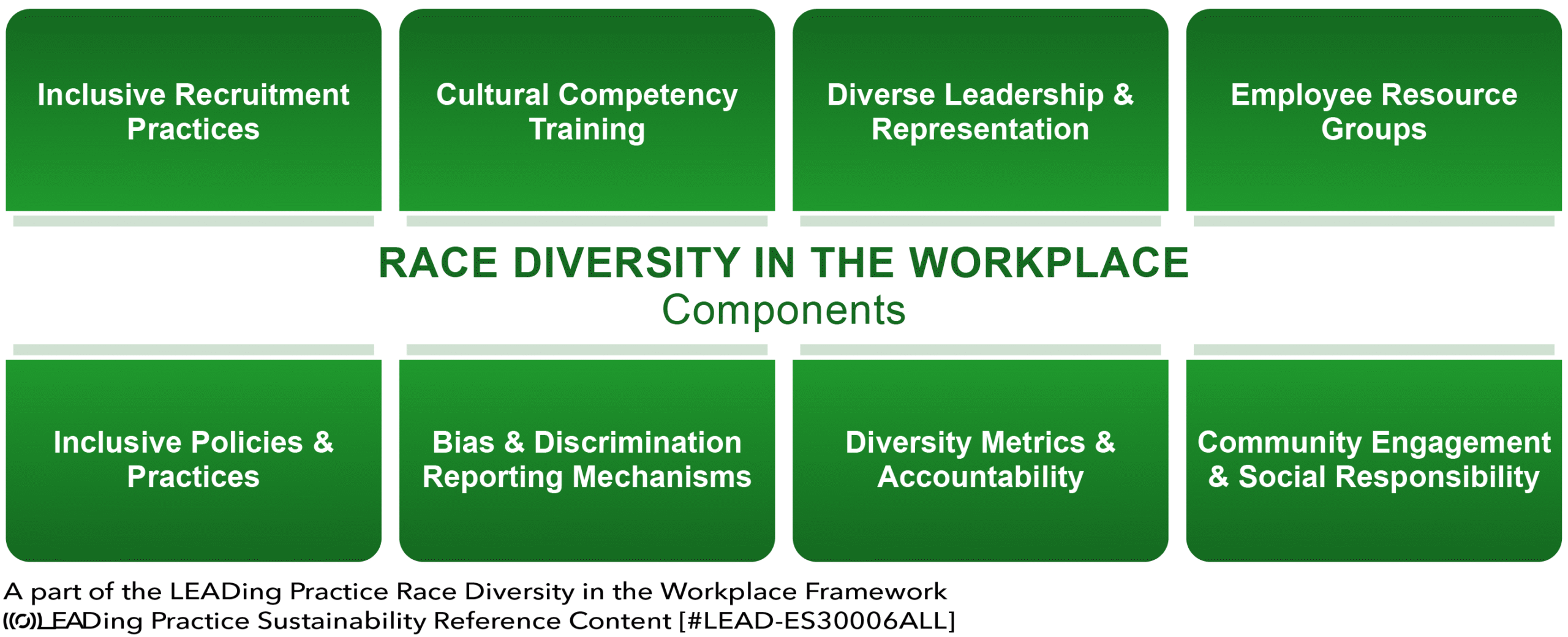
Below are the eight main components of Race Diversity in the Workplace, reflecting both structural patterns and actionable insights for organizations:
These eight components collectively define what it means to create and sustain race diversity in the workplace. They move beyond symbolic representation to emphasize structural inclusion, leadership accountability, and societal impact. When organizations integrate these elements into daily practice, they ensure fair access, diverse perspectives, and ethical integrity across all operations.
Together, these components enable a continuous cycle of assessment, learning, and improvement that leads to more innovative, resilient, and human-centered organizations—where race diversity is not only respected but celebrated as a strategic and moral imperative.
Why This Is Relevant
Why is Race Diversity in the Workplace so Relevant?
Race Diversity in the Workplace is increasingly relevant because it touches every dimension of organizational performance, ethics, and reputation. In an interconnected and multicultural world, employees, customers, and investors all expect transparency, fairness, and equal opportunity. Organizations that value race diversity foster trust, innovation, and resilience by reflecting the societies in which they operate. Moreover, the relevance of race diversity extends beyond compliance—it is about creating workplaces that actively support inclusion, dignity, and respect. A diverse workforce provides broader perspectives, improves collaboration, and enhances decision-making. In today’s global business environment, race diversity is not a secondary initiative but a key factor for long-term sustainability, social responsibility, and organizational success.
The relevance of Race Diversity in the Workplace lies in its power to shape ethical, innovative, and competitive organizations. It ensures equal participation, unlocks creativity, and strengthens the organization’s connection to its people and communities. When businesses prioritize racial equity, they build inclusive cultures where everyone can thrive, regardless of background. This relevance extends far beyond policy—it is a fundamental element of good leadership and sustainable growth. By embracing race diversity, organizations demonstrate integrity, strengthen stakeholder confidence, and lay the foundation for fairer and more future-ready workplaces.
Business/Value Case
The Business/Value Case for Race Diversity in the Workplace
Race Diversity in the Workplace creates measurable value across multiple dimensions of performance, culture, and sustainability. It drives innovation, expands talent access, and strengthens relationships with customers, communities, and investors. Beyond the moral imperative of equity, it delivers a tangible return on inclusion by improving decision-making, collaboration, and brand trust. Organizations with racially diverse teams outperform competitors in creativity and market adaptability, while also reducing compliance and reputational risks.
Stakeholders—from employees and leaders to clients and shareholders—benefit from an environment that mirrors the diversity of society itself. Building a robust business case for race diversity ensures that inclusion becomes a strategic investment that fuels growth, strengthens ethics, and advances long-term organizational resilience.
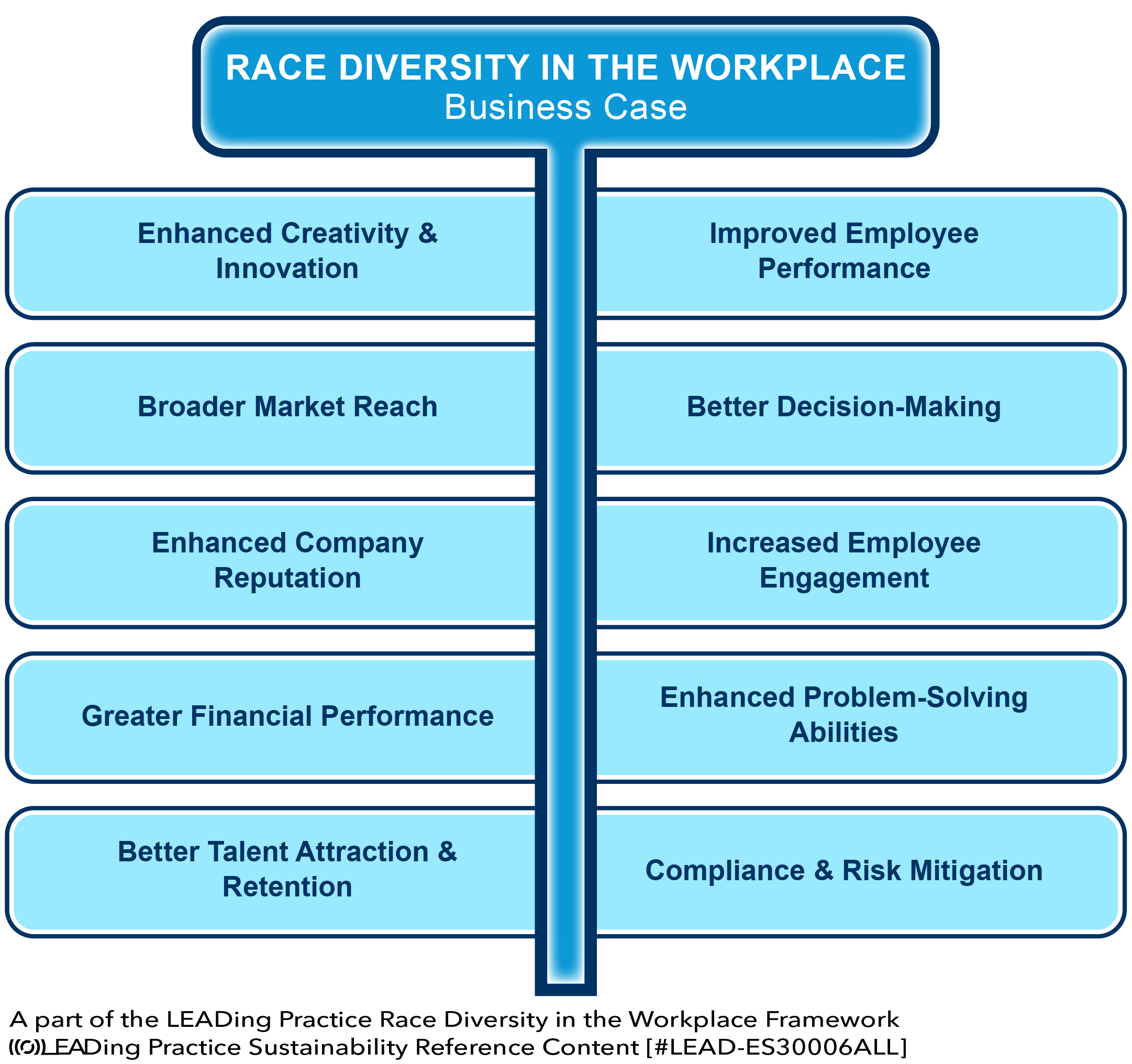
Below are ten key benefits that highlight why this approach is essential for modern organizations:
The business case for Race Diversity in the Workplace is powerful and measurable. It fuels innovation, enhances reputation, and deepens trust among stakeholders. Diverse perspectives improve decision-making, expand market potential, and strengthen compliance and sustainability performance. Organizations that embrace racial diversity gain strategic advantages in agility, creativity, and talent attraction—qualities essential for long-term success in global markets.
By integrating race diversity into their business models, companies move beyond ethics into excellence, proving that inclusion drives both purpose and profit. Race diversity is therefore not only right—it is smart business and a cornerstone of sustainable corporate leadership.
How-To-Guide
How-To-Guide: The Race Diversity in the Workplace Framework
The Race Diversity in the Workplace Framework provides organizations with a structured and standardized way to build, measure, and sustain racial equity. It translates the business case into action through ten interconnected steps that guide planning, implementation, and continuous improvement. The framework ensures that race diversity becomes embedded in the organization’s DNA rather than treated as a one-time initiative.
It enables leaders, HR professionals, and employees to collaborate toward shared goals, aligning accountability and purpose. The framework includes measurable milestones, defined roles, and transparent communication strategies. By applying it, organizations can move systematically from awareness to transformation, ensuring that race diversity and inclusion are achieved efficiently, consistently, and sustainably across all areas of operation and culture.

The 10-Step Way Forward:
The Race Diversity in the Workplace Framework empowers organizations to move from intention to measurable impact through a structured 10-step approach. It integrates leadership, policy, culture, and accountability into a cohesive system for sustained inclusion. By following this framework, organizations can identify gaps, implement practical actions, and embed race diversity into business strategy and performance.
It ensures that every department, from HR to operations, contributes to an inclusive environment. Ultimately, this framework helps organizations act swiftly and effectively while maintaining long-term momentum toward racial equity and social sustainability.
Contact Us
Wanna learn more ? Want to improve your company ?
Projects that require our help ?
Don't waste more time, contact us !
Most Common Pitfalls
The Most Common Pitfalls and Challenges
Many organizations begin race diversity initiatives with good intentions but struggle to achieve meaningful and lasting impact. Common pitfalls often arise from misunderstanding, inconsistency, or lack of accountability. Recognizing these recurring challenges is crucial for building a truly inclusive culture and avoiding practices that unintentionally reinforce inequality. Understanding what not to do is just as important as knowing the right steps. The following examples of antipatterns and worst practices highlight the behaviors, policies, and mindsets that can derail race diversity efforts, damage credibility, and discourage participation across the workforce.
Avoiding these antipatterns and worst practices is fundamental to achieving meaningful race diversity. Superficial actions or unchecked bias can destroy trust, weaken morale, and damage organizational reputation. Successful race diversity programs require authentic leadership engagement, measurable outcomes, and continuous cultural learning. By confronting these pitfalls head-on, organizations can replace performative actions with genuine progress, fostering workplaces that value fairness, equity, and representation in every level of operation.

5 Antipattern Examples
- Symbolic Representation Only: Focusing on visible diversity without genuine inclusion, where people of color are hired but excluded from real influence or leadership opportunities.
- One-Off Training Syndrome: Treating diversity as a short-term event, relying on single training sessions instead of embedding learning into continuous cultural development.
- Leadership Distance: Leaders delegate diversity work to HR instead of modeling inclusive behavior, signaling that race diversity isn’t a shared leadership responsibility.
- Silent Compliance: Following legal diversity requirements without addressing systemic barriers or encouraging open discussions about race and bias.
- Data Without Action: Collecting diversity statistics without using the insights to inform real change, resulting in stagnation and mistrust among employees.

5 Worst Practice Examples
- Tokenism in Recruitment: Hiring individuals from underrepresented racial groups solely to meet quotas, leading to resentment and undermining authenticity of inclusion efforts.
- Ignoring Racial Microaggressions: Dismissing everyday discriminatory remarks or behaviors that accumulate harm and make minority employees feel unsafe or undervalued.
- Color-Blind Policies: Promoting “we don’t see race” narratives that erase lived experiences and prevent the recognition of systemic inequalities within the organization.
- Lack of Representation in Leadership: Maintaining homogenous executive teams that fail to reflect diverse workforces or customer bases, perpetuating decision-making bias.
- No Accountability for Bias: Failing to hold individuals responsible for discriminatory actions or biased outcomes, allowing inequitable behaviors to persist unchallenged.
Lessons Learned
Learning from the Outperformers: Lessons Learned
Organizations that excel in race diversity demonstrate that inclusion is not an initiative but a mindset embedded across all operations. These outperformers show that success depends on leadership commitment, systemic support, and long-term cultural change. Their lessons offer concrete actions that others can follow to accelerate progress. The best practices focus on establishing solid foundations for inclusion, while the leading practices push boundaries—integrating equity into innovation, governance, and sustainability. By studying these examples, organizations can move beyond compliance to leadership, ensuring that diversity is both a competitive advantage and a defining feature of organizational integrity and excellence.
Outperforming organizations prove that race diversity thrives when leadership, strategy, and culture work in harmony. Best practices provide the foundation—clear goals, education, and transparency—while leading practices extend impact beyond the organization into communities, supply chains, and innovation. Together, they demonstrate that diversity excellence requires structure, investment, and authentic engagement. Companies that embrace these approaches gain a distinctive edge in talent, reputation, and societal trust—transforming race diversity from an internal initiative into a model of responsible and sustainable business leadership.
5 Best Practice Examples
- Executive Ownership of Diversity Goals: Senior leaders champion race diversity as a strategic priority, personally driving policies, resource allocation, and accountability for progress across departments and teams.
- Inclusive Recruitment Pipelines: Partnerships with diverse professional associations and community organizations expand talent pools and ensure equitable access to hiring opportunities.
- Continuous Anti-Bias Learning: Ongoing workshops, mentorships, and reflective dialogue sessions cultivate awareness, empathy, and inclusive behavior at all organizational levels.
- Transparent Reporting and Communication: Publishing diversity metrics and progress reports builds trust and ensures accountability with employees, shareholders, and external stakeholders.
- Embedding Diversity in Core Values: Race diversity is codified in the organization’s mission and values, guiding decision-making, performance reviews, and corporate culture.

5 Leading Practice Examples
- Integrated Diversity and Sustainability Strategy: Race diversity goals are fully aligned with ESG and sustainability objectives, linking equity outcomes directly to social impact and long-term value creation.
- Inclusive Product and Service Design: Diverse teams co-create products that reflect multicultural markets, driving innovation and ensuring inclusivity in customer experiences.
- Global Mentorship and Sponsorship Programs: Cross-regional mentorships promote racial equity in leadership development and succession planning, ensuring global inclusivity across all geographies.
- Data-Driven Inclusion Analytics: Advanced analytics identify systemic barriers and measure inclusion sentiment, allowing leaders to make evidence-based diversity interventions.
- Supplier Diversity Ecosystem: Procurement strategies prioritize partnerships with minority-owned businesses, reinforcing racial equity throughout the organization’s supply chain and local economies.
Most Common Artefacts
The Most Common Artefacts
Successful race diversity initiatives rely on tangible artefacts—structured tools, templates, and resources—that guide implementation, communication, and measurement. These artefacts ensure consistency, accountability, and transparency across departments. They help organizations translate strategy into practical actions, enable progress tracking, and sustain engagement over time.
The following artefacts represent commonly used instruments within effective race diversity programs. Each artefact supports not only workplace inclusion but also contributes to broader sustainability innovation by linking social equity with ethical business practices, community impact, and responsible governance.
| Artefact | Description | How it Can Be Used for Sustainability Innovation |
|---|---|---|
| Race Diversity Policy Document | Defines organizational commitments, guiding principles, and anti-discrimination measures. | Integrates race equity into ethical governance and ESG frameworks. |
| Diversity and Inclusion Dashboard | Visualizes workforce diversity data, progress, and KPIs. | Enables data-driven decisions to support equitable and transparent reporting under social sustainability goals. |
| Inclusive Recruitment Toolkit | Provides bias-free job description templates, structured interview guides, and diverse outreach methods. | Expands access to employment for underrepresented racial groups, enhancing social equity and opportunity. |
| Employee Resource Group (ERG) Charter | Establishes structure, objectives, and governance for employee-led racial diversity networks. | Empowers internal advocacy and continuous dialogue, building inclusive social systems within organizations. |
| Training Curriculum on Race Awareness | A standardized set of learning materials addressing racial bias, inclusive communication, and allyship. | Develops workforce competencies that strengthen organizational culture and ethical performance. |
| Race Equity Audit Template | A structured framework to assess representation, pay equity, and inclusion climate. | Identifies systemic inequities and drives corrective actions aligned with fairness and social justice. |
| Stakeholder Engagement Plan | Outlines communication strategies with employees, communities, and partners about race diversity progress. | Builds transparency, trust, and community partnership—core components of sustainable business ecosystems. |
| Annual Race Diversity Report | Summarizes policies, data outcomes, and case studies of inclusion efforts. | Demonstrates accountability and reinforces the organization’s role in promoting racial and social equity. |
Overview of the most common artefacts used with Race Diversity in the Workplace.
These artefacts serve as the operational backbone of race diversity initiatives. Together, these artefacts ensure that diversity becomes a visible, trackable, and evolving aspect of the organization’s social responsibility and long-term sustainability mission.
They translate intentions into measurable actions, creating a bridge between corporate commitment and everyday practice. Beyond their organizational value, they contribute to sustainability innovation by embedding racial equity into governance, education, and stakeholder engagement.
Conclusion
Race Diversity in the Workplace is not only a moral responsibility but a strategic pathway to long-term organizational resilience and innovation. When organizations embrace race diversity holistically—through leadership commitment, equitable systems, and cultural inclusion—they build workplaces that reflect the richness of society itself. The frameworks, best practices, and artefacts outlined in this chapter provide a comprehensive roadmap to move from awareness to sustained action.
By integrating diversity into governance, operations, and sustainability strategies, organizations can unlock creativity, strengthen collaboration, and enhance their social impact. Race diversity is a journey, not a destination. It requires courage, continuous learning, and shared accountability. Companies that lead with authenticity and transparency set the benchmark for inclusion, shaping fairer economies and stronger communities for generations to come.