

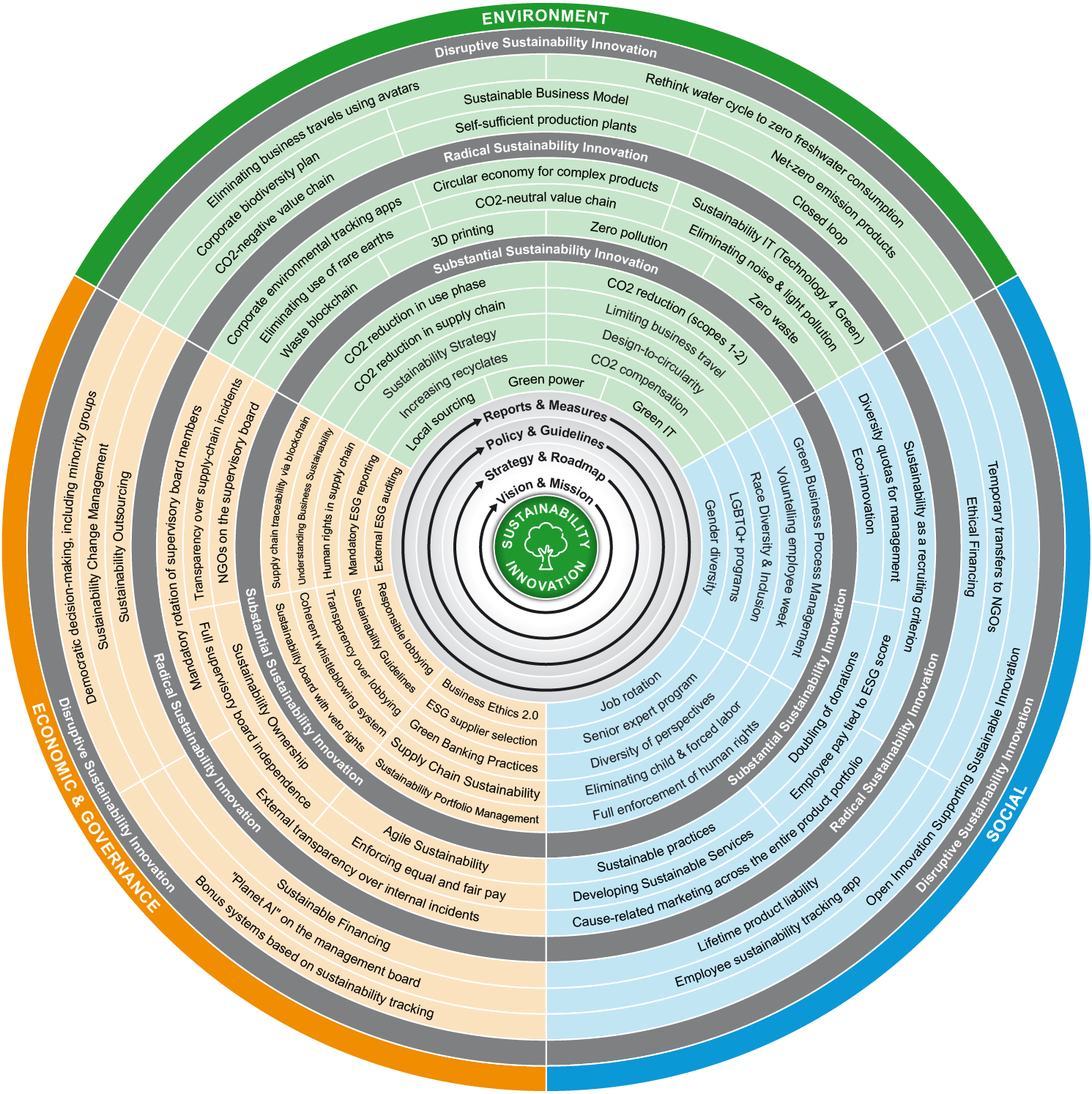
What is Smart Buildings?
Smart Buildings are physical spaces enhanced by advanced digital technologies, designed to create safe, efficient, and sustainable environments. Unlike traditional buildings, they integrate interconnected systems such as IoT sensors, artificial intelligence, data analytics, and automation to monitor and manage everything from lighting and air quality to energy usage and security. These intelligent structures adapt in real time to changing conditions, ensuring occupant comfort while minimizing resource consumption.
They not only improve workplace safety, wellbeing, and productivity but also significantly reduce environmental impact. By combining sustainable design with digital intelligence, Smart Buildings represent a new era of future-ready infrastructure—enabling cities, organizations, and communities to thrive in ways that are resilient, human-centric, and environmentally responsible.
Main Components
The 8 Main Components of Smart Buildings
Smart Buildings are built on a foundation of interconnected systems that merge the physical and digital worlds into one seamless environment. Their success lies in combining sustainable design, digital intelligence, and real-time adaptability. Each component plays a unique role: from energy and climate systems that enhance efficiency, to data platforms that drive insights, to materials and security systems that safeguard people and the planet.
Together, they form an integrated ecosystem that responds dynamically to occupant needs and environmental changes. By aligning technological infrastructure with human-centric design, these components make buildings not only “smart” but also sustainable, resilient, and future-proof. Below are the eight main components that define a Smart Building and ensure long-term value creation for organizations and society.
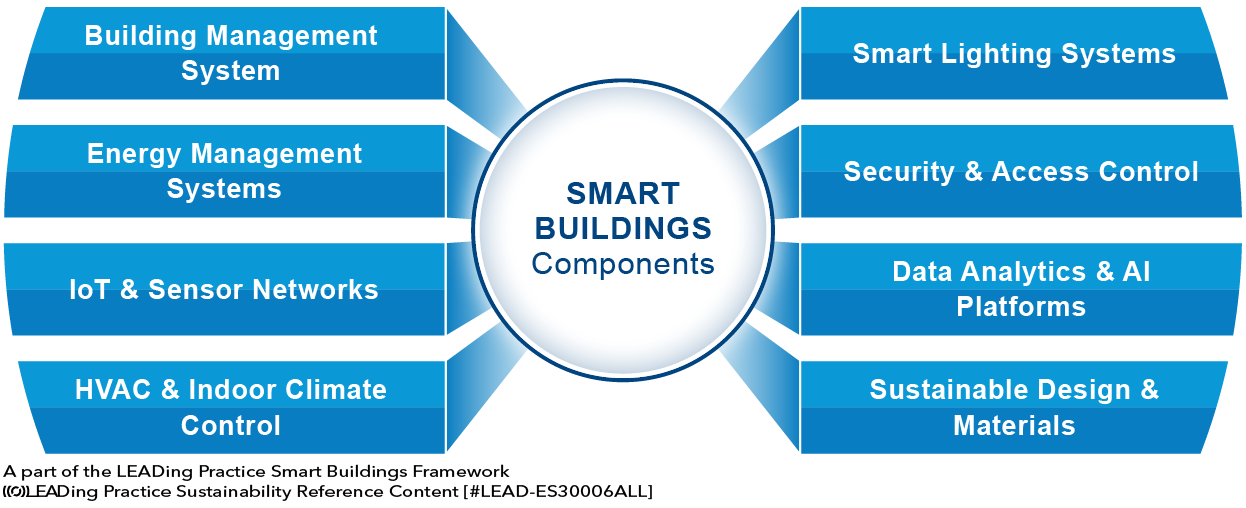
Below are the eight main components of Smart Buildings, reflecting both structural patterns and actionable insights for organizations:
These eight components form the foundation of Smart Buildings, combining technology with sustainability to create safe, efficient, and adaptive environments. The digital backbone—sensors, analytics, and automation—enables continuous optimization, while energy, HVAC, and lighting systems ensure efficiency and comfort. Security and sustainable design further strengthen resilience and environmental responsibility.
Together, they deliver long-term operational savings, improved occupant wellbeing, and compliance with climate goals. When seamlessly integrated, these components transform conventional buildings into intelligent ecosystems capable of learning, adapting, and evolving. They represent the essential building blocks of the future, aligning technological innovation with sustainability and human needs.
Why This Is Relevant
Why is Smart Buildings so Relevant?
Smart Buildings have become highly relevant in today’s world as they directly address the intersecting challenges of climate change, energy demand, and human wellbeing. With buildings responsible for nearly 40% of global energy consumption and greenhouse gas emissions, the way we design, operate, and retrofit our spaces has a profound impact on the planet. At the same time, modern work and living environments must adapt to shifting needs, including hybrid work models, health and safety protocols, and the demand for flexible, user-centric spaces.
By combining intelligent systems, sustainable design, and real-time adaptability, Smart Buildings provide a future-ready solution that balances environmental responsibility, operational efficiency, and human comfort. Their relevance lies in their ability to transform buildings into engines of sustainability, resilience, and economic value.
Business/Value Case
The Business/Value Case for Smart Buildings
The value of Smart Buildings extends far beyond technology upgrades; they represent a strategic investment in sustainability, efficiency, and human experience. By integrating intelligent systems, organizations can drastically reduce energy consumption, improve occupant wellbeing, and optimize the use of space. At the same time, they enhance resilience, meet regulatory demands, and unlock financial savings. Stakeholders across the spectrum—owners, facility managers, employees, city planners, and policymakers—stand to benefit from these outcomes.
Smart Buildings make the built environment more adaptable to changing needs, from hybrid work models to carbon neutrality targets. The business case is therefore compelling: lower operational costs, healthier spaces, increased productivity, and measurable contributions to climate goals. Below are the ten most wanted benefits and advantages associated with Smart Buildings.
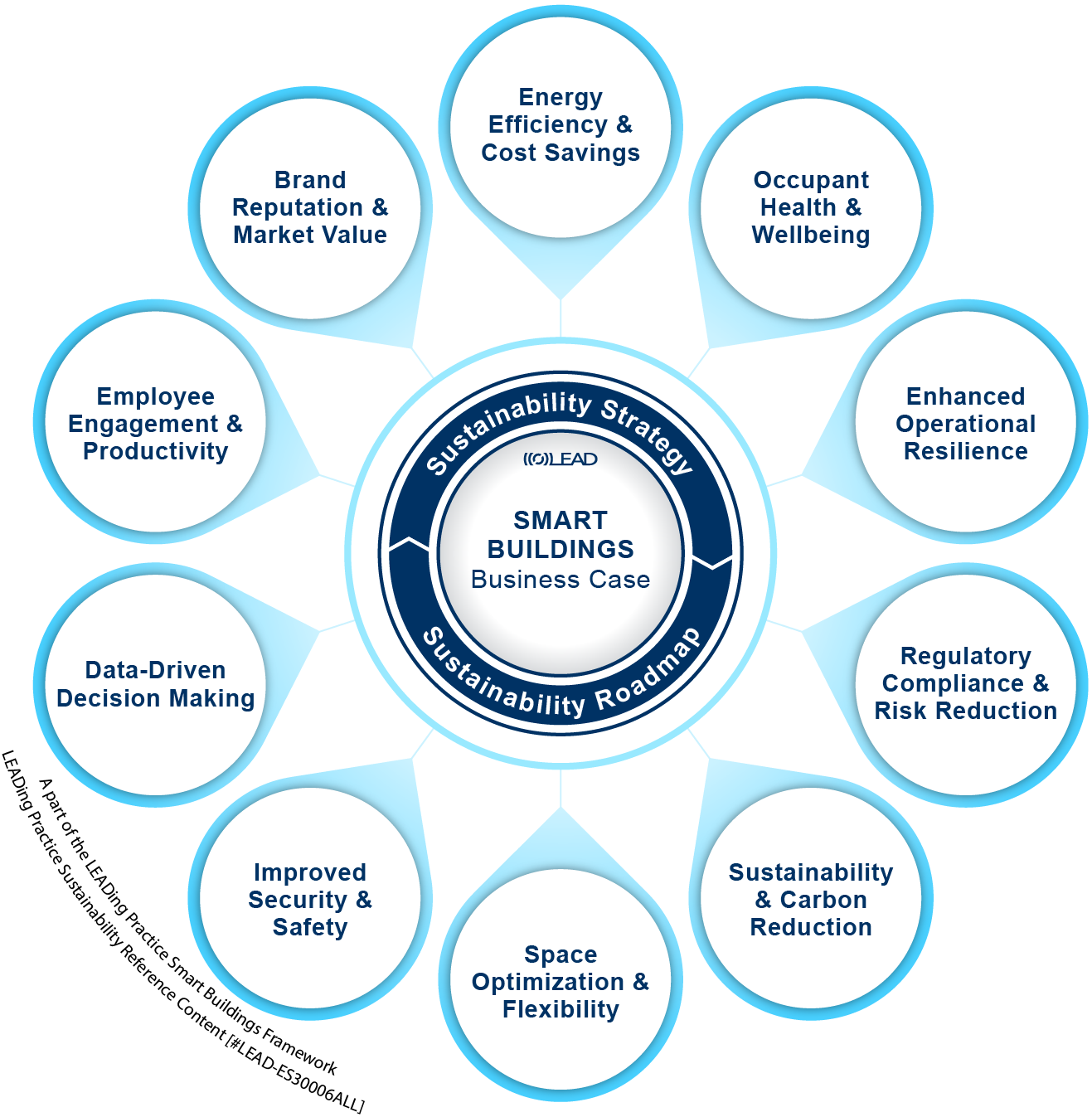
Below are ten key benefits that highlight why this approach is essential for modern organizations:
The business case for Smart Buildings is rooted in measurable financial, operational, and societal value. They reduce costs through energy efficiency, safeguard health and security, and align with ESG and carbon-neutral targets. By enabling flexibility and resilience, they prepare organizations for evolving workforce models and environmental challenges.
Stakeholders at every level—from employees to executives and policymakers—gain from improved performance, wellbeing, and reputation. Smart Buildings are not only a sustainability imperative but also a strategic differentiator in a competitive market. They ensure that buildings are more than just physical assets: they are adaptive, intelligent contributors to long-term success.
How-To-Guide
How-To-Guide: The Smart Buildings Framework
The Smart Buildings Framework provides organizations with a structured and standardized way to plan, design, and operate intelligent, sustainable spaces. Rather than treating individual technologies or solutions in isolation, it integrates them into a coordinated 10-step approach that balances business case, sustainability goals, and human-centric design. This framework ensures all involved roles—executives, facilities managers, IT specialists, architects, and sustainability officers—can align their work to clear objectives, timelines, and responsibilities.
By embedding the business case into the framework, organizations are able to link investments directly to measurable value such as energy savings, regulatory compliance, and employee wellbeing. The framework is designed to accelerate transformation, reduce risks, and provide clarity in execution, enabling organizations to confidently move forward with Smart Buildings initiatives.
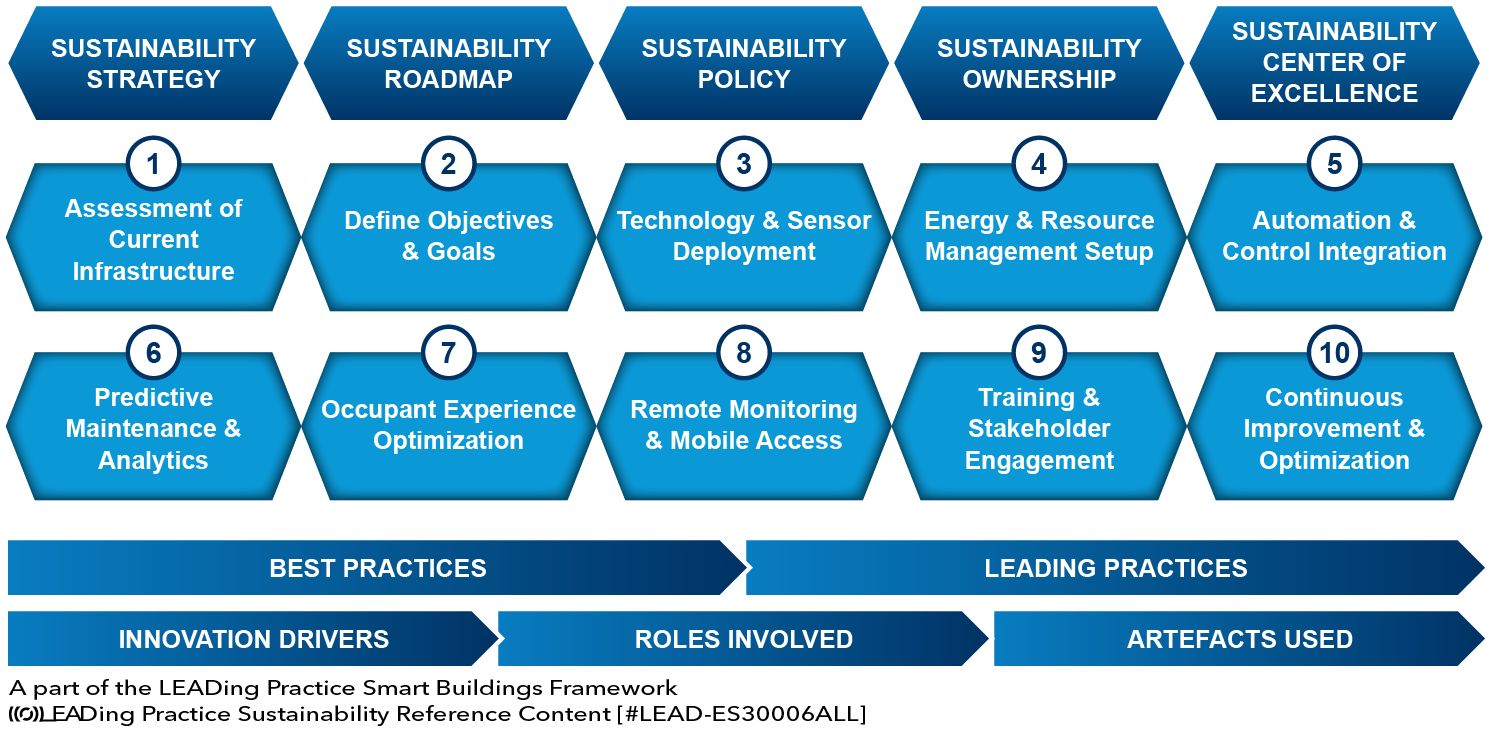
The 10-Step Way Forward:
The Smart Buildings Framework offers organizations a roadmap to transform traditional buildings into intelligent, sustainable environments. By following a structured 10-step approach, stakeholders can reduce risks, align with sustainability goals, and maximize the return on investment. Each stage builds logically on the previous one, creating a clear pathway from initial assessment to continuous optimization.
Importantly, the framework ensures that the business case is central, linking technology decisions directly to measurable outcomes. This approach accelerates adoption, enhances collaboration, and ensures Smart Buildings deliver on their promise of efficiency, resilience, and human-centric value in a rapidly changing world.
Contact Us
Wanna learn more ? Want to improve your company ?
Projects that require our help ?
Don't waste more time, contact us !
Most Common Pitfalls
The Most Common Pitfalls and Challenges
While Smart Buildings promise efficiency, resilience, and sustainability, many projects fail to deliver on expectations due to common pitfalls. These challenges often arise from rushed implementations, poor planning, or a lack of stakeholder alignment. Without careful attention, organizations risk high costs, fragmented systems, and underutilized technologies.
Understanding the most frequent antipatterns and worst practices can help decision-makers avoid mistakes and ensure successful outcomes. The following lists highlight five key antipatterns and five worst practices that undermine Smart Building initiatives if left unaddressed.

5 Antipattern Examples
- Technology Overload: Deploying too many uncoordinated technologies at once creates complexity and confusion, overwhelming teams while limiting interoperability and undermining intended performance improvements.
- Siloed Decision-Making: When IT, facilities, and sustainability teams act independently, fragmented approaches emerge, preventing integration and alignment with overarching organizational goals.
- Ignoring Human Experience: Designing purely for efficiency while neglecting occupant wellbeing reduces adoption, weakens satisfaction, and undermines the building’s overall value proposition.
- Short-Term Focus: Prioritizing immediate cost savings over long-term sustainability goals creates fragile solutions that fail to adapt to future requirements or regulations.
- Underestimating Change Management: Rolling out new systems without training or user engagement leads to resistance, poor adoption, and diminished return on investment.
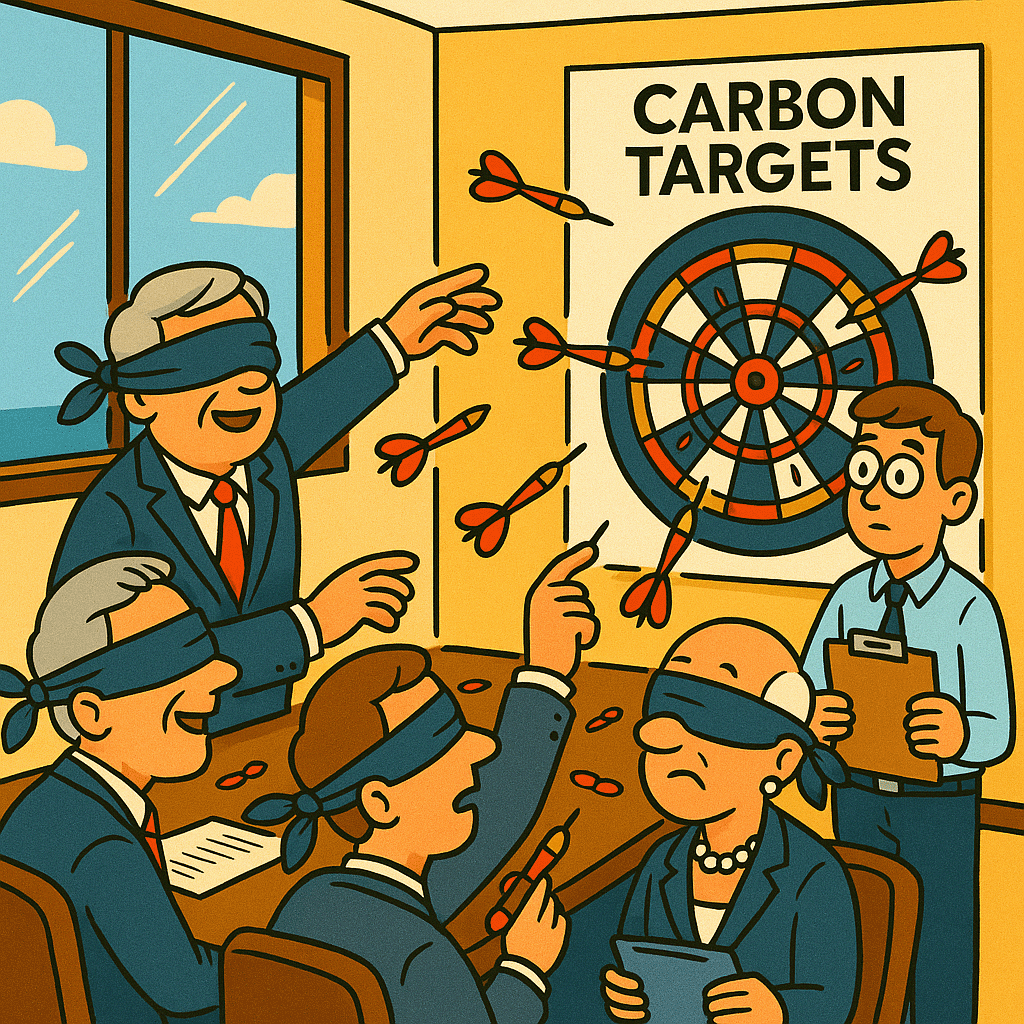
5 Worst Practice Examples
- No Business Case Alignment: Launching smart building initiatives without linking them to organizational objectives wastes resources and fails to deliver measurable financial or sustainability outcomes.
- Lack of Cybersecurity: Overlooking cybersecurity for IoT and data systems exposes the building to vulnerabilities, risking data breaches and operational disruption.
- Ignoring Data Governance: Failing to establish clear policies for collecting, storing, and using data causes compliance risks and diminishes trust among stakeholders and occupants.
- One-Size-Fits-All Approach: Implementing generic solutions without tailoring to the building’s unique needs results in poor performance and limited occupant benefits.
- Neglecting Lifecycle Costs: Focusing only on upfront costs while ignoring maintenance, upgrades, and scalability leads to expensive long-term inefficiencies and sustainability setbacks.
Lessons Learned
Learning from the Outperformers: Lessons Learned
Organizations that excel in Smart Buildings show that success comes not only from adopting technology, but also from embedding sustainability, governance, and human-centric principles. These outperformers integrate strategy with execution, using data-driven insights to continually optimize performance. They demonstrate that smart infrastructure is most valuable when aligned with long-term resilience, stakeholder needs, and environmental goals.
By studying their approaches, others can learn what practices to replicate and what leadership behaviors set the standard. Below are five best practices and five leading practices that represent lessons learned from outperformers.
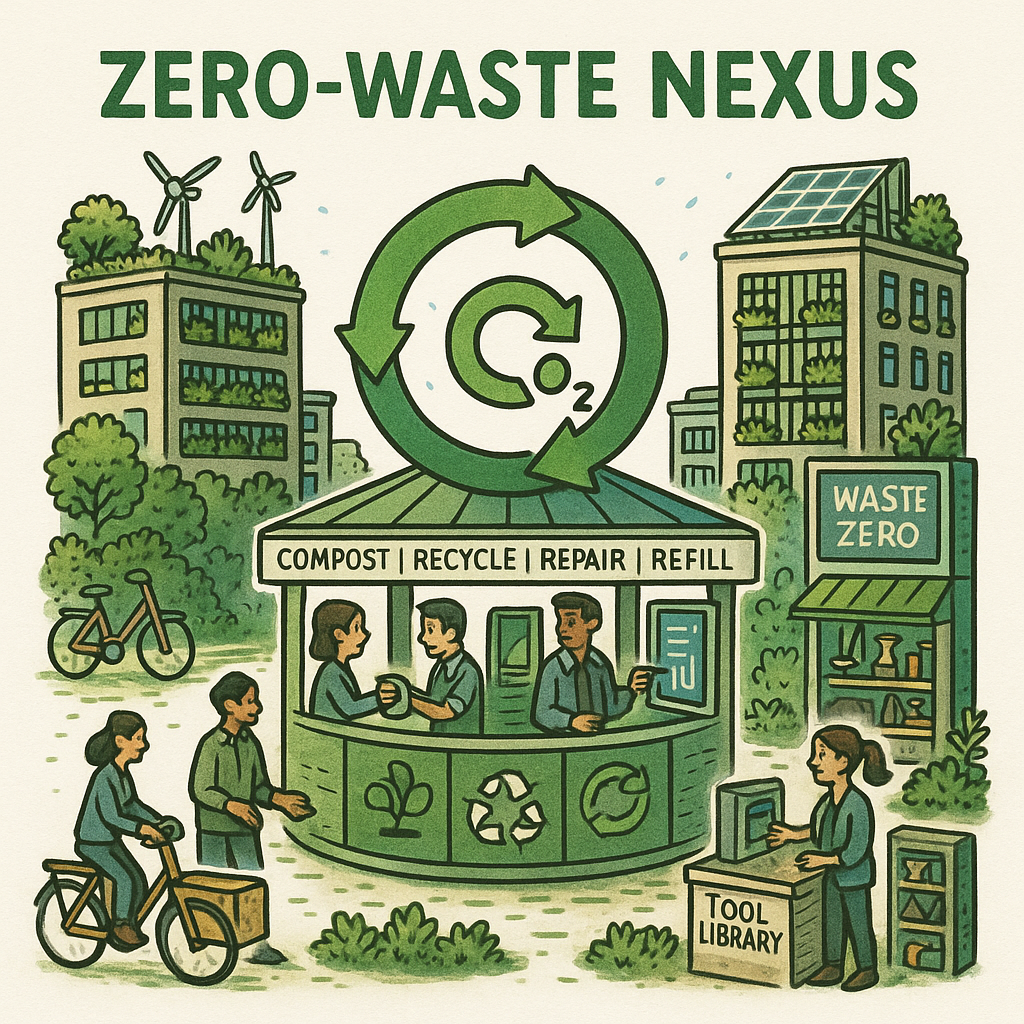
5 Best Practice Examples
- Holistic Integration: Linking HVAC, lighting, energy, and security into one management system maximizes efficiency and simplifies operations.
- User-Centric Design: Prioritizing comfort, accessibility, and wellbeing ensures strong adoption and greater productivity.
- Continuous Monitoring: Regular tracking of key performance indicators allows ongoing optimization and measurable results.
- Cybersecurity by Design: Embedding strong security protocols from the start protects systems, data, and occupants.
- Scalable Solutions: Building adaptable systems ensures growth and evolving technologies can be integrated without costly redesign.
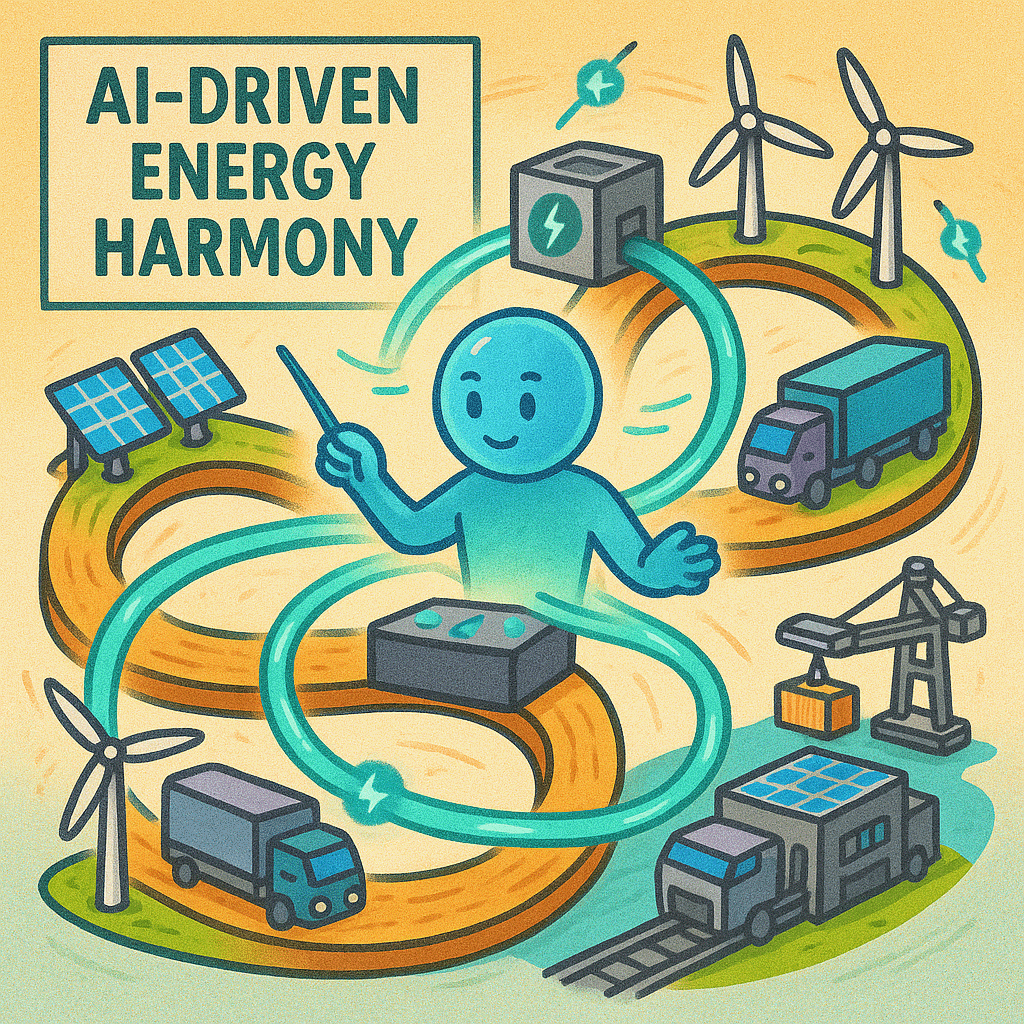
5 Leading Practice Examples
- AI-Driven Predictive Operations: Using machine learning to anticipate maintenance, energy peaks, and occupancy needs enables proactive management, ensuring resilience, lowering costs, and enhancing occupant experience across facilities.
- Circular Economy Integration: Smart Buildings embrace reuse, recycling, and renewable materials, reducing waste while demonstrating sustainability leadership to investors, regulators, and employees.
- Cross-Sector Collaboration: Successful projects align architects, IT leaders, and city planners, creating buildings that seamlessly integrate with urban sustainability goals and digital infrastructure.
- Dynamic Space Management: Outperformers leverage real-time data to flexibly reconfigure workspaces, aligning hybrid work demands with energy efficiency and occupant wellbeing.
- Carbon Accountability Platforms: Implementing digital tools to measure and offset emissions positions organizations as sustainability leaders while delivering transparent, reportable progress to stakeholders.
Most Common Artefacts
The Most Common Artefacts
Artefacts are tangible outputs that help organizations structure, document, and guide their Smart Building initiatives. They transform abstract ideas into usable tools for planning, governance, and innovation. These artefacts not only document the technical and operational aspects but also provide frameworks for sustainability alignment, stakeholder communication, and lifecycle management.
By leveraging artefacts, organizations can accelerate decision-making, ensure compliance, and foster innovation in sustainable building practices. Below are some of the most common artefacts that support Smart Building implementation and how they can be used for sustainability innovation.
| Artefact | Description | How it Can Be Used for Sustainability Innovation |
|---|---|---|
| Building Analysis Report | Detailed documentation of energy, HVAC, lighting, and IT infrastructure performance. | Identifies inefficiencies and provides data-driven opportunities for retrofits and energy optimization. |
| Smart Building Decomposition Model | A structured breakdown of all building systems into smaller functional units. | Helps organizations pinpoint resource-heavy components and prioritize green redesign or circular economy integration. |
| Sustainability Portfolio Dashboard | A digital tool showing real-time performance on energy, water, carbon, and waste. | Enables ongoing monitoring and transparent reporting against ESG targets. |
| IoT Deployment Map | Visual representation of sensor placement across building systems. | Ensures optimal coverage for data-driven decisions that minimize waste and maximize efficiency. |
| Occupancy and Space Utilization Report | Analysis of workspace usage patterns and occupancy trends. | Supports hybrid work strategies and reduces unnecessary real estate and energy consumption. |
| Energy Management Strategy Document | A roadmap for implementing demand response, renewable integration, and energy-saving measures. | Aligns operations with net-zero goals and regulatory requirements. |
| Lifecycle Cost Assessment | Financial model showing upfront, operational, and maintenance costs of smart systems. | Encourages investment in sustainable solutions with long-term returns and reduced total cost of ownership. |
| Carbon Footprint Ledger | A record of building-related emissions from operations and energy consumption. | Provides accountability and supports offsetting programs, demonstrating commitment to climate leadership. |
Overview of the most common artefacts used with Smart Buildings.
Artefacts bring clarity and structure to Smart Building projects, bridging the gap between strategic ambitions and practical execution. They allow organizations to decompose complex systems, document progress, and measure impact against sustainability goals. Whether through dashboards, cost models, or decomposition frameworks, artefacts provide actionable insights that ensure smarter investments and stronger governance.
Most importantly, they transform sustainability from a vision into measurable outcomes. By adopting and maintaining these artefacts, organizations create a repeatable and transparent approach to Smart Building innovation that supports both business value and environmental responsibility.
Conclusion
Smart Buildings represent a paradigm shift in how we design, manage, and experience the built environment. By integrating advanced technologies such as IoT, AI, and automation with sustainable design principles, they transform buildings from static structures into adaptive, intelligent ecosystems. These spaces deliver tangible business value through energy savings, operational efficiency, and improved occupant wellbeing, while also aligning with global sustainability goals such as carbon neutrality.
However, the journey requires more than just technology: it calls for frameworks, best practices, and governance to avoid common pitfalls and maximize outcomes. Organizations that embrace Smart Buildings not only future-proof their operations but also demonstrate leadership in innovation, resilience, and environmental stewardship. In a rapidly evolving world, Smart Buildings are no longer optional—they are essential to building a sustainable and thriving future.