

What is Local Sourcing?
Local sourcing is the practice of procuring goods, services, or materials from suppliers within a defined geographical proximity to where they will be used. Unlike traditional global sourcing models, which often emphasize scale and low cost through distant suppliers, local sourcing focuses on building stronger ties between organizations and their surrounding communities. This approach not only shortens supply chains but also fosters sustainability, economic resilience, and social impact at the regional level. At its core, local sourcing is about prioritizing proximity, authenticity, and collaboration. By reducing the distance that products travel, businesses minimize their carbon footprint, ensure faster delivery, and enhance product freshness.
Beyond logistics, local sourcing strengthens relationships with local producers, artisans, and service providers, preserving cultural diversity and promoting fair economic opportunities. In today’s sustainability-driven landscape, local sourcing is no longer just an ethical choice but a strategic imperative. It supports environmental stewardship, bolsters supply chain resilience, and positions businesses as responsible actors committed to creating shared value for both society and the planet.
Main Components
The 8 Main Components of Local Sourcing
Local sourcing is not a one-dimensional activity; it involves a balanced mix of social, economic, and environmental considerations. To implement it effectively, organizations must understand the components that form the foundation of sustainable local procurement. These elements serve as guiding principles that help businesses evaluate suppliers, ensure accountability, and build resilience in their supply chains.
By breaking down local sourcing into eight interconnected components, organizations can better manage their sourcing strategies, align with sustainability goals, and create long-term value for both the business and the communities it serves.
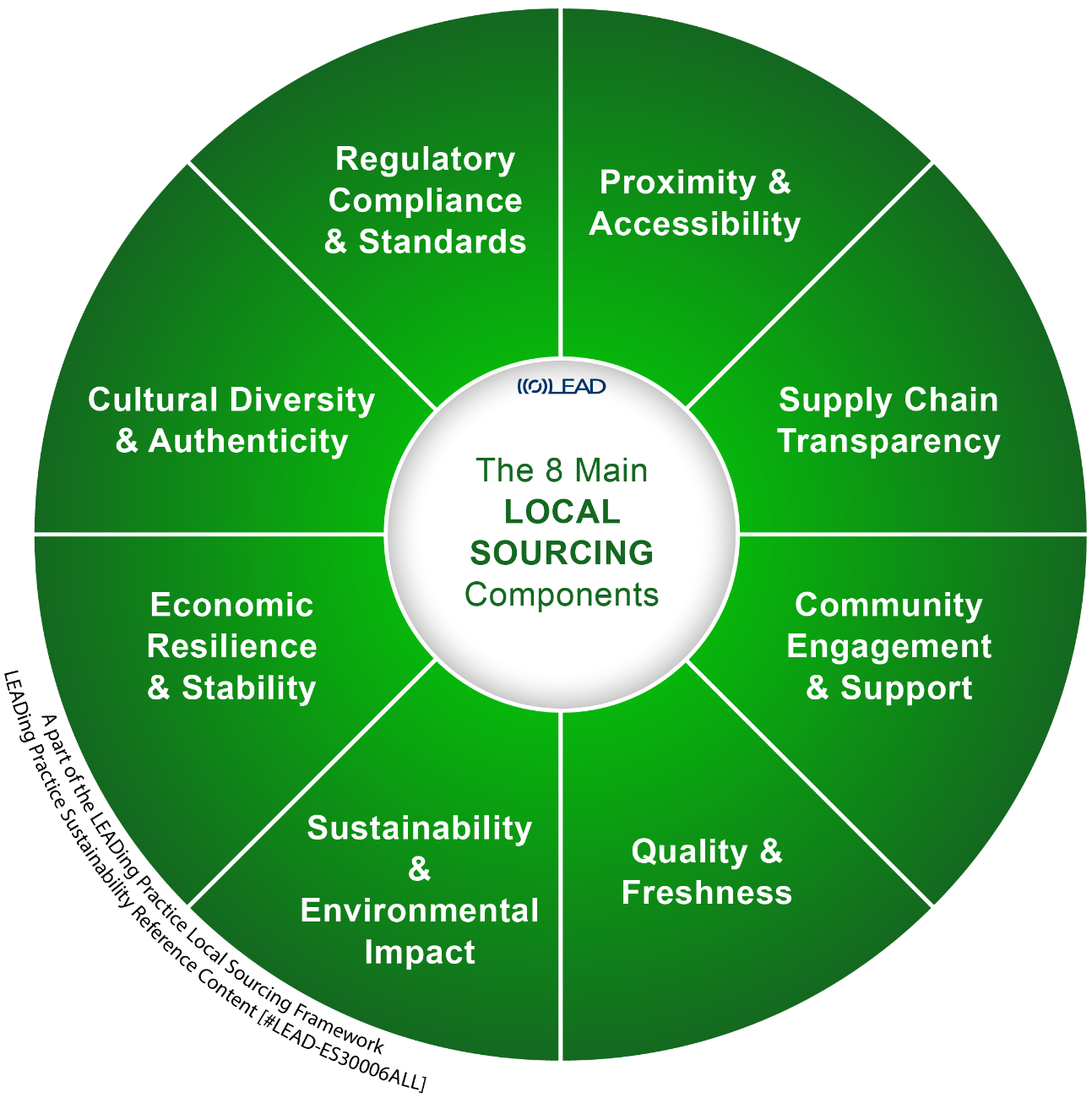
Below are the eight main components of Local Sourcing, reflecting both structural patterns and actionable insights for organizations:
The eight components of local sourcing provide a comprehensive framework for implementing responsible procurement strategies. They emphasize proximity, transparency, community, quality, sustainability, resilience, cultural authenticity, and compliance. Together, these dimensions ensure that local sourcing is not just a cost-saving initiative but a powerful approach to creating long-lasting value for businesses, communities, and the environment.
Organizations that integrate these components into their sourcing practices can transform their supply chains into engines of sustainability and resilience.
Why This Is Relevant
Why is Local Sourcing so Relevant?
Local sourcing has rapidly emerged as a cornerstone of sustainable business strategy. In an era marked by climate change, supply chain disruptions, and rising stakeholder expectations, the ability to source locally is not just a nice-to-have — it is a necessity. By shortening supply chains and embedding sustainability principles into procurement, organizations can reduce environmental impact, strengthen local economies, and enhance their reputation as responsible and community-driven actors. Its relevance extends across multiple dimensions. From an environmental standpoint, local sourcing directly reduces emissions linked to transportation and packaging.
Socially, it fosters stronger community ties, generates employment, and reinforces cultural identity. Economically, it enhances resilience by reducing reliance on global suppliers and mitigating risks from geopolitical or logistical disruptions. Strategically, it empowers organizations to differentiate themselves through transparency, authenticity, and ethical practices. For organizations pursuing sustainability transformation, local sourcing serves as a powerful lever to achieve environmental, social, and governance (ESG) goals. Its growing importance reflects a shift toward businesses not only creating shareholder value but also generating meaningful benefits for people, communities, and the planet.
Business/Value Case
The Business/Value Case for Portfolio Management
The business case for local sourcing is grounded in its ability to deliver value on multiple fronts: environmental, economic, and social. Organizations that embrace local sourcing gain more than just a reliable supply of goods and services. They reduce transportation costs, lower carbon emissions, build stronger community relationships, and increase supply chain resilience. These benefits create a ripple effect, positively influencing stakeholders ranging from customers and suppliers to regulators and communities.
Local sourcing also provides companies with a platform for differentiation, enabling them to tell powerful stories about authenticity, sustainability, and community support. By viewing local sourcing not only as a procurement strategy but as a value driver, organizations can achieve operational efficiency while contributing to long-term sustainability and resilience.

Below are ten key benefits that highlight why this approach is essential for modern organizations:
The business and value case for local sourcing is compelling. Beyond operational value, local sourcing offers businesses a chance to build authentic stories, foster community trust, and co-create innovative solutions with local partners.
By leveraging these ten advantages, organizations can secure not only a stronger bottom line but also a more sustainable and socially responsible future. From cost efficiency and quality improvement to supply chain resilience and environmental sustainability, its benefits reach across industries and stakeholders.
How-To-Guide
How-To-Guide: The Local Sourcing Framework
Adopting local sourcing is most effective when approached through a structured framework that ensures consistency, alignment, and measurable impact. The Local Sourcing Framework provides such a foundation. It guides organizations through a clear set of steps — from defining objectives to continuous learning — that weave sustainability, accountability, and collaboration into procurement processes. At its heart, this framework embeds the local sourcing business case, ensuring that each decision connects back to organizational value creation and stakeholder impact.
By following a standardized framework, organizations can reduce risks, foster trust among partners, and achieve sustainability outcomes more quickly. The framework is designed to involve all roles — from procurement managers to community engagement teams — ensuring that strategy is translated into meaningful action.

The 10-Step Way Forward:
The Local Sourcing Framework provides a structured roadmap for organizations to implement sustainable procurement in a fast and effective manner. With such a framework, businesses can confidently initiate their local sourcing projects, building long-term resilience, innovation, and sustainability into their supply chains.
By standardizing the “what, when, where, how, and who” across ten steps, organizations ensure consistency, accountability, and measurable outcomes. This approach enables alignment across roles, reduces risks, and maximizes positive community and environmental impact.
Contact Us
Wanna learn more ? Want to improve your company ?
Projects that require our help ?
Don't waste more time, contact us !
Most Common Pitfalls
The Most Common Pitfalls and Challenges
Local sourcing can create significant value, but only if implemented carefully. Many organizations underestimate the complexity of engaging local suppliers, balancing costs, and maintaining sustainability goals. Common pitfalls often arise from neglecting stakeholder engagement, overemphasizing short-term gains, or failing to assess risks effectively.
By recognizing both antipatterns and worst practices, organizations can avoid repeating mistakes that have led others to fail. These insights help leaders adopt a more thoughtful, resilient, and sustainable approach to building proximity-driven supply chains.

5 Antipattern Examples
- Ignoring Stakeholder Input: Overlooking the voices of communities, employees, or suppliers results in misaligned strategies and weak support for local sourcing initiatives.
- Short-Term Focus: Prioritizing immediate savings over long-term sustainability leads to fragile supplier relationships and wasted opportunities for resilience.
- Overemphasis on Cost: Chasing the lowest price neglects quality, ethics, and community impact, undermining trust and long-term benefits.
- Supplier Dependence: Relying too heavily on a single local supplier increases risk and vulnerability to disruptions.
- Limited Transparency: Failing to establish clear visibility across the supply chain erodes stakeholder trust and weakens credibility.

5 Worst Practice Examples
- No Risk Assessment: Neglecting risk analysis leaves organizations exposed to regulatory, financial, or environmental setbacks.
- Weak Supplier Collaboration: Minimal communication with local suppliers prevents alignment, innovation, and shared problem-solving.
- Cultural Blind Spots: Ignoring local traditions or community norms creates friction, resistance, and reputational damage.
- Poor Contract Management: Vague or one-sided agreements generate disputes, legal risks, and a breakdown in supplier relationships.
- Lack of Monitoring and Metrics: Without performance tracking, organizations cannot measure impact, identify issues, or continuously improve their sourcing strategy.
Lessons Learned
Learning from the Outperformers: Lessons Learned
The most successful organizations in local sourcing have not only avoided common pitfalls but have also pioneered practices that set them apart as outperformers. Their approaches demonstrate how to embed sustainability, resilience, and innovation into supply chains by working closely with communities and suppliers.
By studying these lessons, organizations can adopt best practices that are proven to work and leading practices that push the boundaries of what local sourcing can achieve. These examples serve as practical guidance for any organization seeking to strengthen its sustainability journey.
5 Best Practice Examples
- Stakeholder Collaboration: Engaging early and consistently with suppliers, communities, and employees ensures alignment and shared ownership of local sourcing goals.
- Supplier Development: Investing in training and capability-building equips local suppliers to meet quality, sustainability, and compliance standards.
- Transparent Reporting: Publishing sustainability and sourcing reports strengthens trust with regulators, investors, and customers by demonstrating accountability.
- Integrated Metrics: Tracking KPIs such as delivery times, CO₂ savings, and community impact allows continuous performance improvement.
- Balanced Strategy: Combining cost considerations with environmental and social goals ensures local sourcing delivers value across all dimensions.

5 Leading Practice Examples
- Holistic Supplier Engagement: Viewing suppliers as long-term partners and co-innovators fosters stronger collaboration, resilience, and shared growth opportunities.
- Localized Value Chains: Designing supply chains that capitalize on regional strengths reduces reliance on distant sources and enhances adaptability.
- Ethical and Transparent Sourcing: Embedding fair trade principles and cultural sensitivity builds trust and safeguards against reputational risks.
- Technology Integration: Using tools like blockchain, digital twins, or advanced analytics improves traceability, efficiency, and sustainability outcomes in local sour.
- Community Empowerment: Actively investing in skill development, education, and infrastructure ensures sourcing creates lasting value beyond transactions.
Most Common Artefacts
The Most Common Artefacts
In local sourcing, certain artefacts emerge as practical tools that organizations consistently use to manage, measure, and improve their initiatives. These artefacts serve as both operational enablers and innovation drivers, helping businesses align their sourcing strategies with sustainability goals.
By documenting, visualizing, and standardizing processes, artefacts create transparency, accountability, and opportunities for continuous improvement. Below are some of the most common and impactful artefacts in local sourcing.
| Artefact | Description | How it Can Be Used for Sustainability Innovation |
|---|---|---|
| Supplier Contracts | Detailed agreements outlining terms, conditions, and expectations with local suppliers. | Establish transparent and sustainable relationships with local suppliers, ensuring adherence to ethical sourcing practices and fostering innovation through collaboration. |
| Quality Assurance Documentation | Documents specifying quality standards, inspection procedures, and criteria for ensuring product compliance. | Utilize quality documentation to maintain high standards, promoting sustainability by reducing defects and waste, and encouraging innovation in product development. |
| Supply Chain Maps | Visual representations of the local sourcing supply chain, showcasing the flow of goods and services locally. | Enhance transparency and traceability in the supply chain, supporting sustainability by identifying areas for improvement and innovation in logistics and distribution. |
| Sustainability Reports | Comprehensive reports detailing the environmental, social, and economic impact of local sourcing practices. | Leverage sustainability reports to communicate transparently with stakeholders, demonstrating commitment to disruptive sustainability innovation and continuous improvement. |
| Cost-Benefit Analyses | Evaluations outlining financial advantages and disadvantages related to local sourcing initiatives. | Use cost-benefit analyses to make informed decisions, optimizing financial resources and supporting the business case for sustainable and innovative local sourcing practices. |
| Local Economic Impact Assessments | Studies determining the effect of local sourcing on the economy, including job creation and community development. | Incorporate economic impact assessments to align local sourcing efforts with broader sustainability goals, contributing positively to local communities and fostering innovation. |
| Compliance Records | Documentation ensuring adherence to local and international regulations and legal requirements. | Mitigate legal and regulatory risks, demonstrating a commitment to ethical practices in local sourcing, and creating a foundation for sustainable innovation in alignment with legal frameworks. |
| Risk Management Plans | Strategies outlining the identification, assessment, and mitigation of risks associated with local sourcing. | Develop risk management plans to anticipate and address potential challenges, fostering resilience in the supply chain and creating an environment conducive to disruptive sustainability innovation. |
| Performance Metrics and KPIs | Key performance indicators measuring the success and efficiency of local sourcing initiatives. | Use performance metrics to assess the impact of local sourcing efforts, identify areas for improvement, and drive innovation by setting and achieving sustainability goals. |
| Cultural Sensitivity Guidelines | Guidance on understanding and respecting the cultural nuances of local suppliers and communities. | Foster positive relationships and sustainable partnerships by incorporating cultural sensitivity, ensuring alignment with local values and encouraging innovation through diverse perspectives. |
| Local Supplier Profiles | Comprehensive profiles providing details about local suppliers, including capabilities and performance history. | Leverage supplier profiles to make informed decisions, identify potential innovation partners, and build long-term relationships with local suppliers that align with sustainability goals. |
| Employee Training Materials | Educational resources for internal staff on the importance of local sourcing, ethical considerations, and best practices. | Educate employees to cultivate a sustainability-focused culture, fostering innovation in processes and practices that contribute to disruptive sustainability in the organization. |
Overview of the most common artefacts used with Local Sourcing.
These artefacts are more than operational tools; they act as bridges between sustainability objectives and practical execution. By using supply chain maps, contracts, reports, assessments, and guidelines, organizations can innovate their sourcing models, reduce negative impacts, and create shared value.
Together, these artefacts enable transparency, accountability, and continuous improvement, making local sourcing a powerful driver of sustainability transformation.
Conclusion
Local sourcing is far more than a procurement decision — it is a strategic pathway toward building sustainable, resilient, and community-driven supply chains. By prioritizing proximity and engaging with local suppliers, organizations can significantly reduce their environmental footprint, stimulate regional economies, and strengthen trust with stakeholders. The framework, components, and artefacts of local sourcing collectively provide a roadmap for translating sustainability goals into tangible business practices.
As global supply chains face disruptions and climate change intensifies, local sourcing positions businesses to adapt quickly while creating shared value for people and the planet. By avoiding pitfalls, learning from outperformers, and applying best and leading practices, organizations can transform local sourcing into a catalyst for innovation. In doing so, they not only achieve competitive advantage but also contribute meaningfully to shaping a sustainable future.