

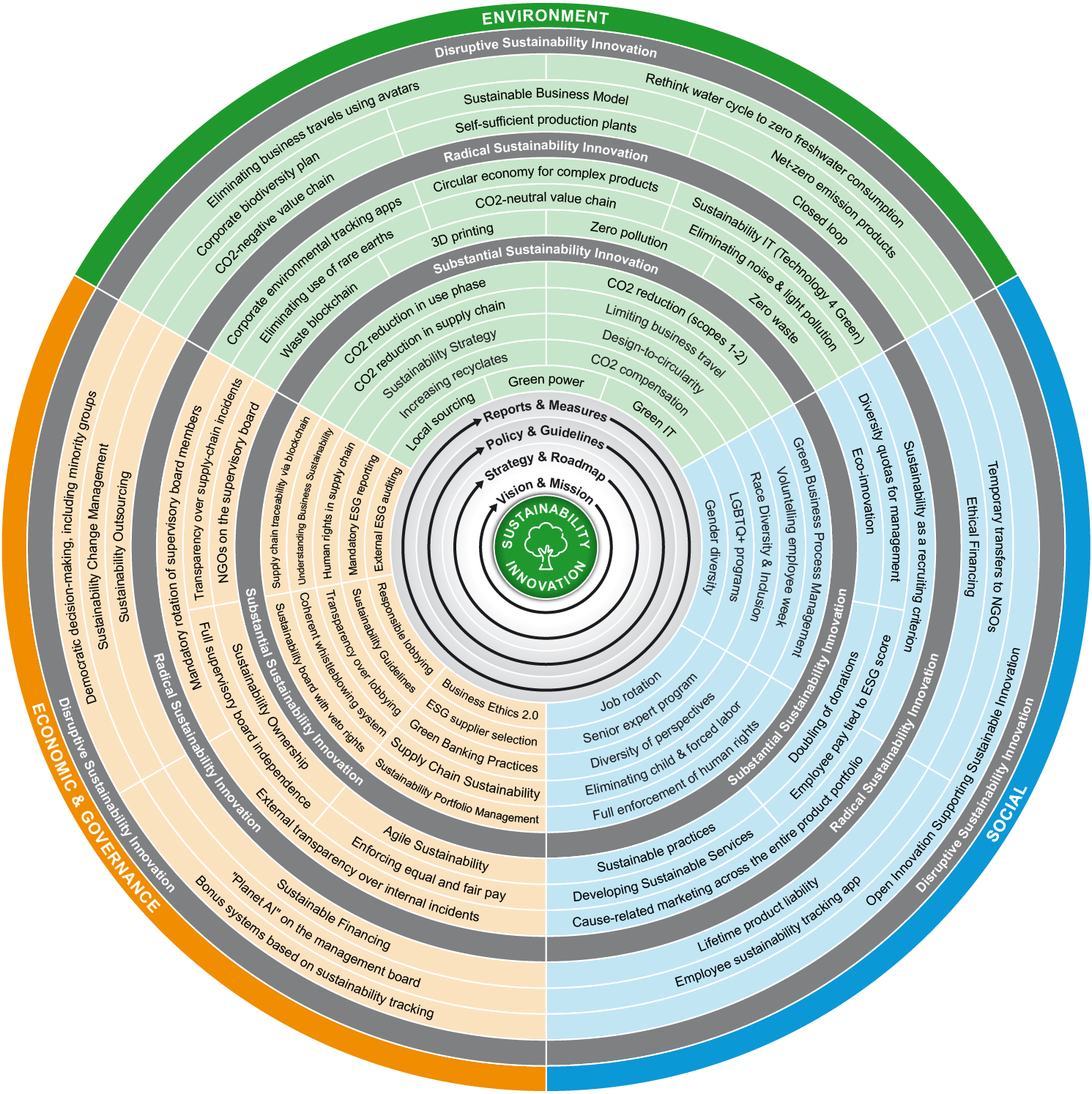
What are Sustainability Drivers of Change ?
Sustainability Drivers of Change are the key external and internal forces that push organizations toward sustainable practices. These include regulations, market and investor expectations, technological innovation, leadership, and stakeholder pressure. Regulatory demands and shifting consumer behavior require companies to act responsibly or risk penalties and reputational damage.
Technology supports this shift by enabling cleaner operations and better tracking of sustainability efforts. Internally, strong leadership and an engaged workforce help embed sustainability into core business practices. While challenges exist, such as short-term pressures and unclear standards, organizations that embrace these drivers strengthen their competitiveness, resilience, and long-term value.
Main Components
The 8 Main Components of Sustainability Drivers of Change
Sustainability drivers of change refer to the primary forces that push businesses, governments, and societies toward more sustainable practices. These drivers shape how we approach economic growth, resource management, and the long-term health of the environment.
Understanding these key components helps organizations, policymakers, and individuals align their strategies with sustainability goals.
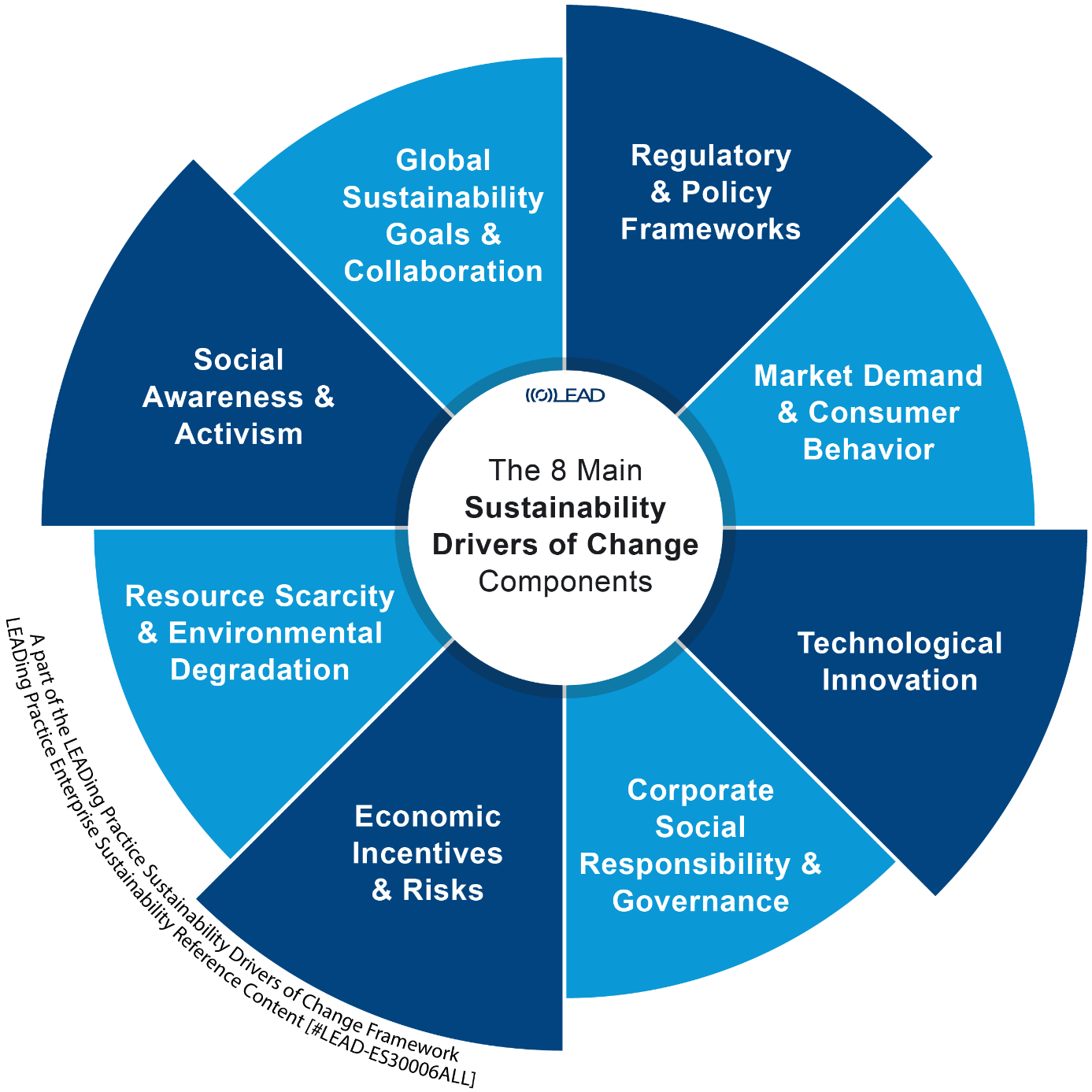
The eight main components:
The eight sustainability drivers of change outlined in this section highlight the multifaceted forces shaping the global shift toward more responsible and resilient practices. From evolving regulations and consumer expectations to technological advancements and global cooperation, these drivers influence how organizations and societies prioritize and pursue sustainability.
Recognizing and responding to these interconnected components empowers stakeholders to proactively adapt, innovate, and lead in building a more sustainable future.
Why This Is Relevant
Why are Sustainability Drivers of Change so Relevant?
Sustainability Drivers of Change are crucial as organizations confront urgent issues like climate change and resource depletion. These drivers—regulatory, market, technological, and social—push companies to embed sustainability into core strategies. Tighter laws (e.g., Paris Agreement) require innovation, especially in high-impact sectors. Consumers and investors now favour sustainable brands and ESG performance, while technology enables cleaner operations and better tracking.
Internally, leadership and culture play a key role, as does pressure from stakeholders demanding responsible practices. Aligning with frameworks like the UN SDGs further boosts credibility and collaboration. In short, sustainability drivers help businesses meet legal, market, and societal demands while enhancing resilience, relevance, and long-term success.
Business/Value Case
The Business/Value Case of Sustainability Drivers of Change
Sustainability is no longer a mere ethical consideration; it is a strategic priority that can yield significant business and societal value. The drivers of sustainability change bring numerous benefits and advantages, helping organizations to improve efficiency, reduce risks, and increase long-term profitability.
Understanding these benefits helps to make the business case for sustainability, demonstrating its tangible value to various stakeholders, from companies to consumers and governments.
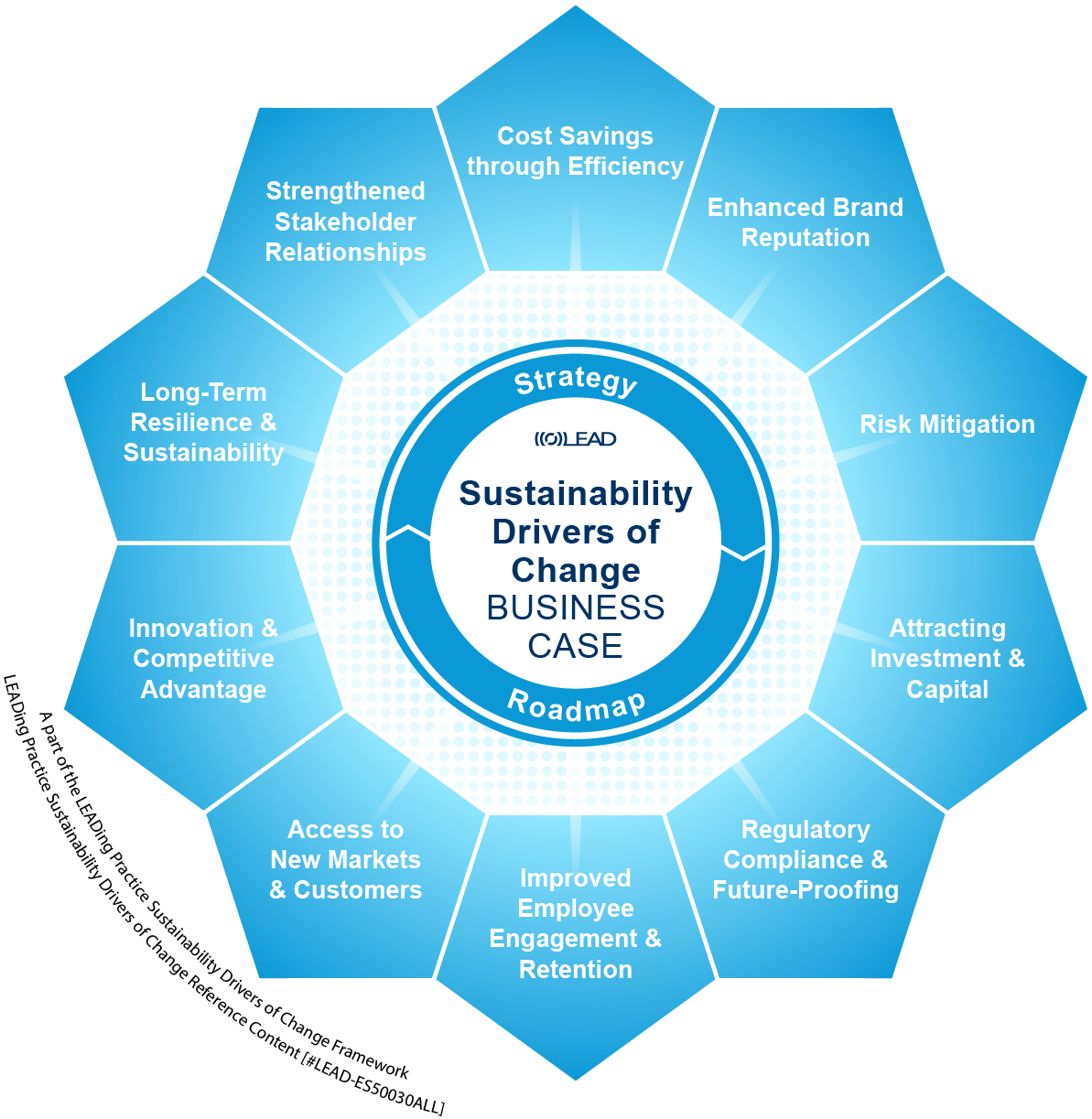
Top 10 Benefits of Sustainability Drivers of Change:
The drivers of sustainability change deliver measurable business value, making sustainability not only an ethical obligation but also a strategic advantage. By embracing these drivers, organizations can unlock cost efficiencies, strengthen stakeholder trust, attract investment, and future-proof their operations.
As this section shows, sustainability is a catalyst for innovation, resilience, and long-term growth—benefiting businesses, people, and the planet alike.
How-To-Guide
How-To-Guide: The Sustainability Drivers of Change Framework
The Sustainability Drivers of Change Framework is a structured approach that helps organizations integrate sustainability into operations and align initiatives with broader business goals. It identifies key drivers of change and offers a standardized method to guide efforts across all levels. A core element is the business case, highlighting sustainability’s value for both the company and its stakeholders.
The framework provides clear guidance on what actions to take, when, where, and by whom, promoting consistency, accountability, and collaboration. Whether reducing emissions or engaging stakeholders, it serves as a roadmap for navigating sustainability challenges effectively.
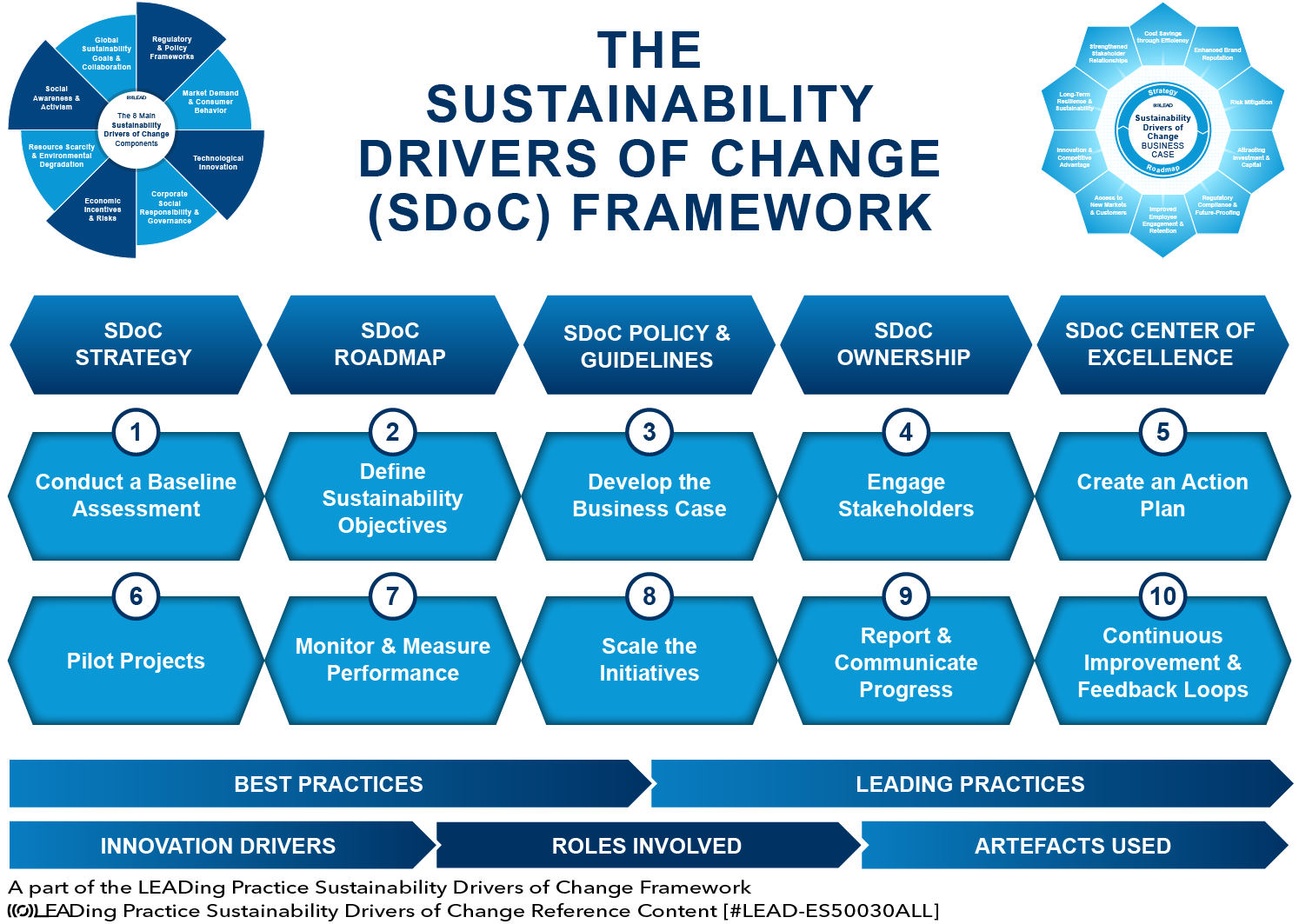
The 10-Step Way Forward:
The Sustainability Drivers of Change Framework offers organizations a clear, actionable roadmap for embedding sustainability into their core strategies and operations. By following its 10-step process, businesses can move from intention to execution with confidence—ensuring alignment, efficiency, and impact at every stage.
This structured approach not only supports long-term environmental and economic resilience but also empowers cross-functional teams to lead meaningful, measurable change.
Contact Us
Wanna learn more ? Want to improve your company ?
Projects that require our help ?
Don't waste more time, contact us !
Most Common Pitfalls
The Most Common Pitfalls and Challenges
Sustainability Drivers of Change guide responsible practices, but many organizations face common pitfalls. Treating sustainability as a side project, rather than integrating it into core strategy, leads to fragmented efforts. Short-term thinking prioritizes quick wins over long-term resilience. Failing to engage stakeholders reduces collaboration and risks pushback, while poor measurement undermines transparency and progress. A lack of leadership commitment often stalls momentum.
Learning from others’ mistakes helps avoid these issues and strengthens sustainability outcomes. Antipatterns like greenwashing, siloing, and rigid planning hinder real sustainability progress. Success requires integration, adaptability, and balancing tech with human-centred change. Ignoring core integration, long-term planning, metrics, stakeholders, or leadership weakens sustainability efforts. Avoiding these worst practices is essential to drive meaningful, lasting change.
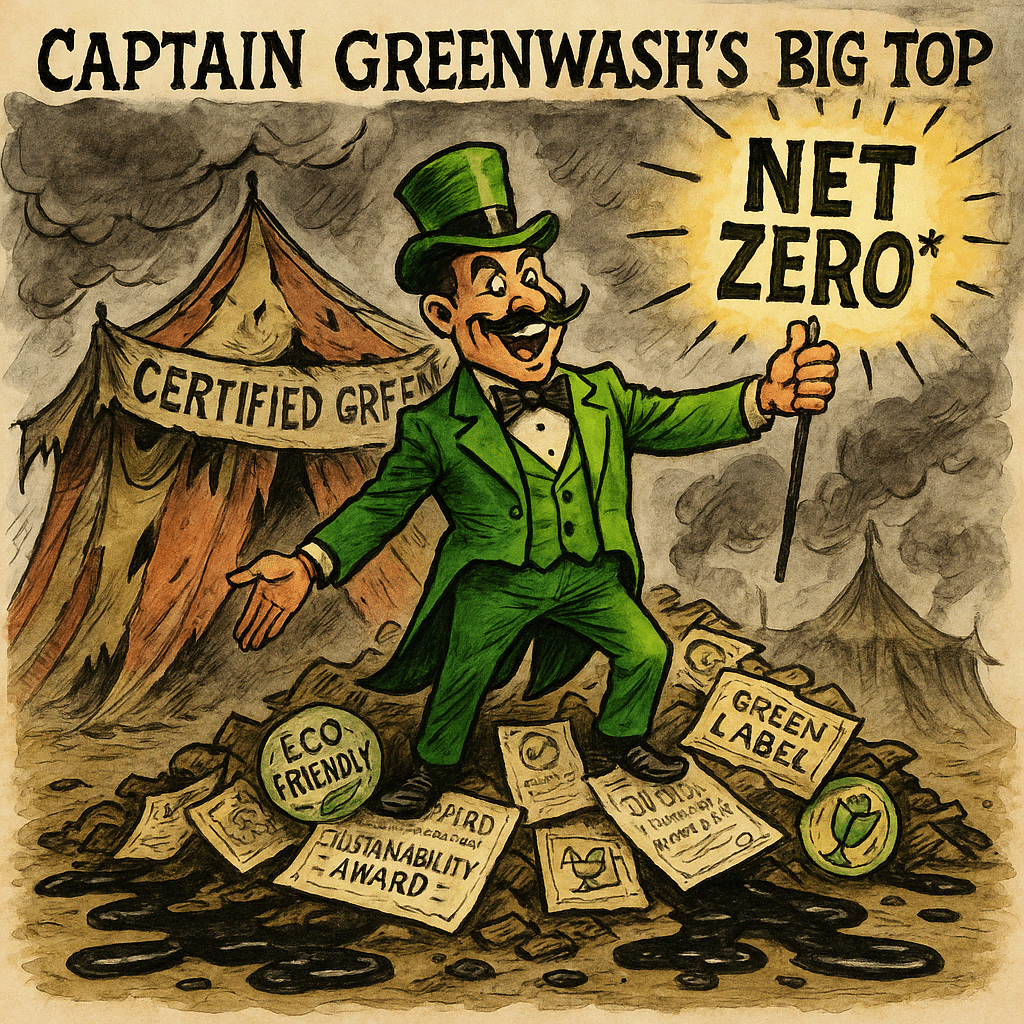
5 Antipattern Examples
- "Greenwashing": Misleading claims about sustainability can damage trust and reputation. Appearance without action leads to backlash and loss of credibility.
- "Siloing" Sustainability: Limiting sustainability to one department weakens impact. True progress requires cross-functional integration and alignment with strategy.
- "Tick-box" Compliance: Doing the bare minimum for compliance lacks genuine impact. Effective sustainability needs proactive commitment, not just checking boxes.
- Lack of Flexibility in Sustainability Plans: Overly rigid plans can’t adapt to changes in markets, tech, or policy. Flexibility is key to staying relevant and seizing new opportunities.
- Overreliance on Technology: Tech alone isn’t enough—social and behavioral change matters too. Ignoring human factors undermines lasting sustainability progress.

5 Worst Practice Examples
- Treating Sustainability as a Side Project: Separating sustainability from core operations leads to isolated efforts and minimal impact. For real progress, it must be fully integrated into the business strategy.
- Prioritizing Short-Term Gains Over Long-Term Goals: Focusing only on quick profits undermines long-term resilience and innovation. Sustainable success requires a balance between short-term results and future goals.
- Lack of Clear Metrics and Reporting Mechanisms: Without KPIs and transparent reporting, organizations can’t track or communicate sustainability progress, eroding stakeholder trust and limiting improvements.
- Ignoring Stakeholder Engagement: Excluding stakeholders like employees or communities results in low buy-in and failed initiatives. Engagement ensures relevance, inclusivity, and shared ownership.
- Weak Leadership Commitment: Lack of executive support stalls sustainability progress. Leadership drives culture, resource allocation, and long-term commitment across the organization.
Lessons Learned
Learning from the Outperformers: Lessons Learned
Learning from others is crucial for organizations implementing Sustainability Drivers of Change. Sustainability spans environmental, social, and economic areas, making it complex. By leveraging the experience of industry leaders, companies can avoid common mistakes, accelerate progress, and apply proven strategies effectively. This approach shortens the learning curve and focuses resources on high-impact initiatives. Learning from others clarifies which drivers—like leadership or stakeholder engagement—are most relevant and helps avoid pitfalls such as isolating sustainability from core strategy.
Sustainability outperformers offer clear best practices: integrating sustainability into business strategy, setting measurable goals, involving employees, and using technology to track progress. They also prioritize stakeholder engagement, adopt the triple bottom line, and report transparently on progress. Strong leadership is key to aligning efforts across the organization. Integrating sustainability into supply chains and investing in sustainable tech helps businesses stay competitive and responsive to evolving regulations and market expectations.
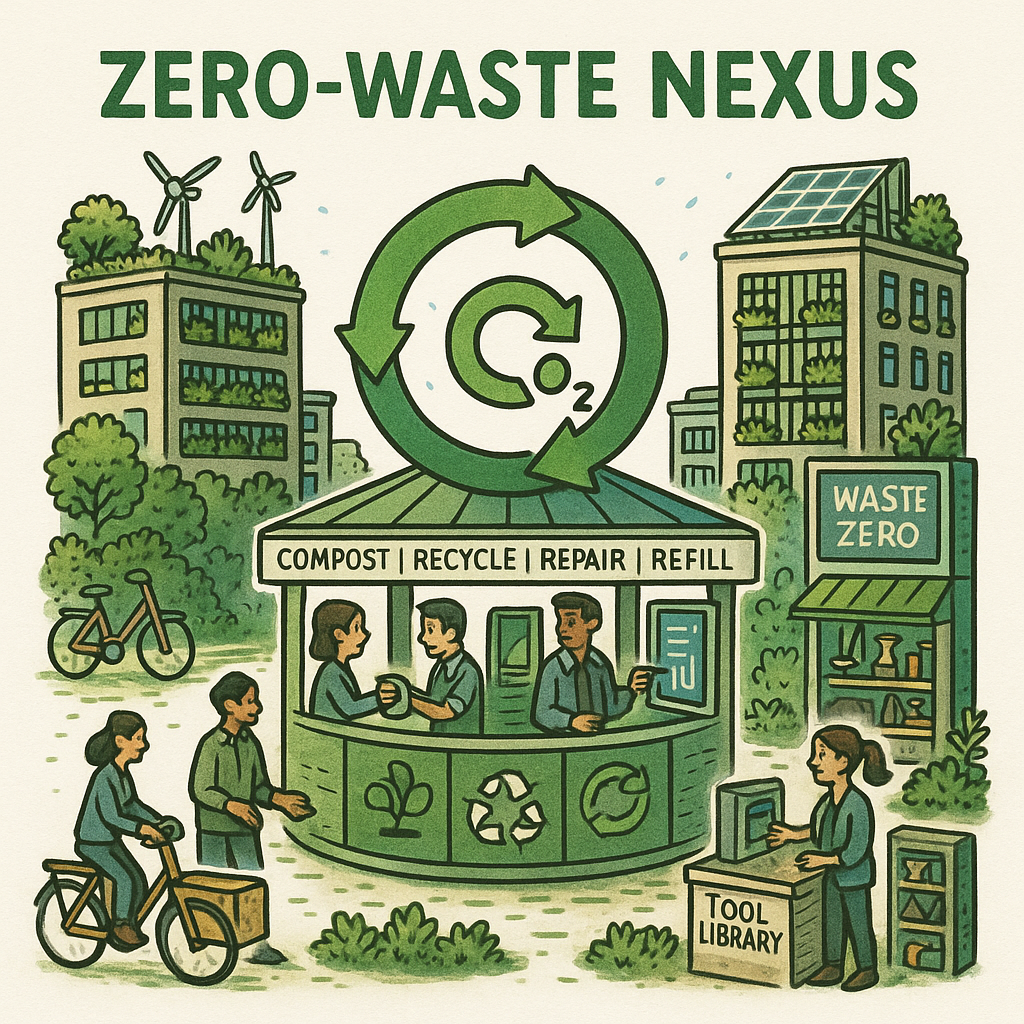
5 Best Practice Examples
- Embedding sustainability into the core business strategy : Treat sustainability as integral to the corporate strategy rather than as a separate initiative.
- Setting clear and measurable sustainability goals: Establish specific targets for areas such as carbon emissions, waste, and energy consumption, with continuous tracking and transparency.
- Fostering a culture of sustainability among employees: Train, incentivize, and engage employees to promote sustainable behaviors and create ownership of sustainability initiatives.
- Leveraging technological innovation: Use technologies such as energy-efficient systems and sustainability data analytics to enhance performance and efficiency.
- Engaging stakeholders at every level: Collaborate with customers, investors, suppliers, and communities to achieve broader environmental and social objectives.
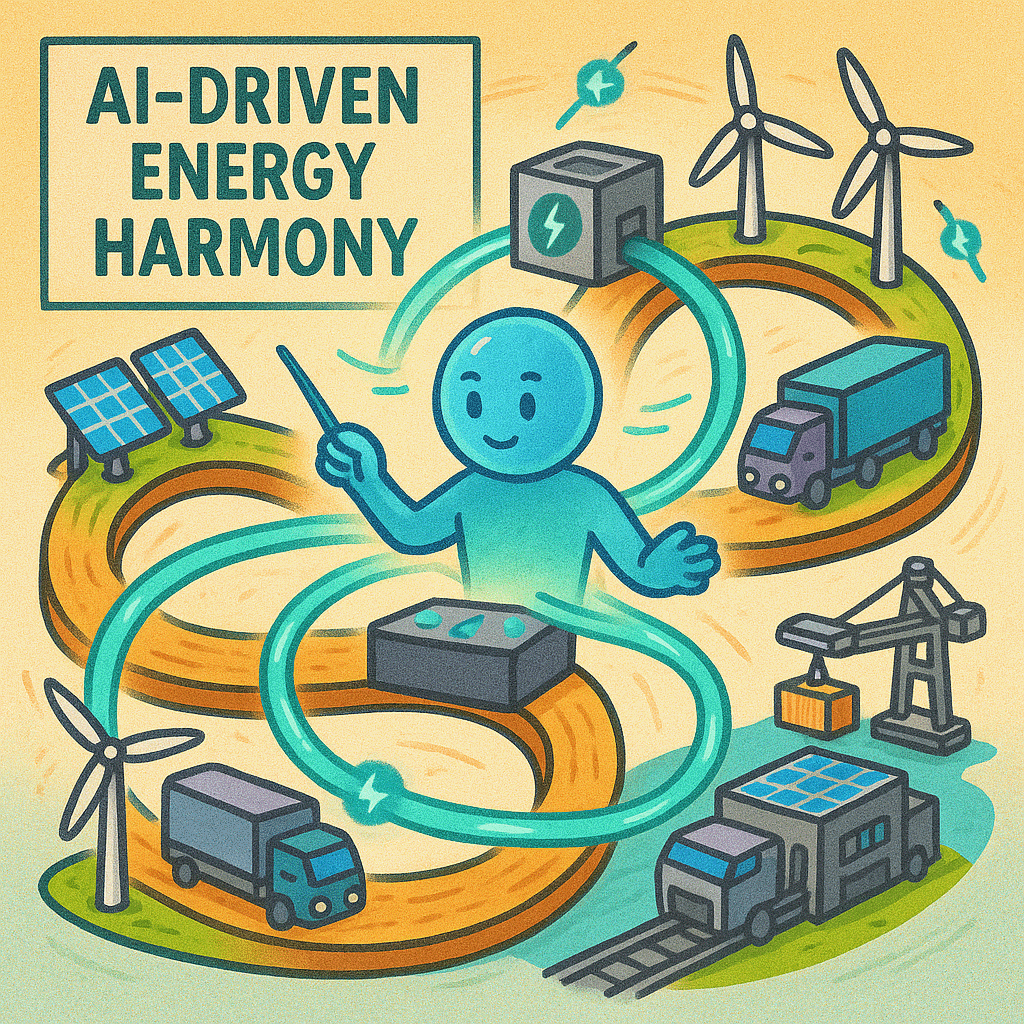
5 Leading Practice Examples
- Adopting the triple bottom line approach: Measure organizational success through financial, social, and environmental performance.
- Implementing sustainability reporting: Regularly publish transparent reports outlining progress, challenges, and future sustainability goals.
- Demonstrating leadership commitment to sustainability: Ensure that senior executives actively champion sustainability initiatives, aligning the organization with long-term sustainability goals.
- Integrating sustainability into supply chain management: Collaborate with suppliers to reduce environmental impact and improve social standards across the value chain.
- Being early adopters of sustainability-focused innovations: Invest proactively in technologies and practices such as circular economy models and energy-efficient systems to stay ahead of trends and regulations.
Most Common Artefacts
The Most Common Artefacts
To effectively implement sustainability strategies, organizations rely on a variety of practical tools—known as artefacts—that support planning, measurement, and continuous improvement.
These artefacts complement the Sustainability Drivers of Change by translating strategic goals into actionable steps, enabling consistent progress and accountability. The following table highlights the most commonly used sustainability artefacts, outlining their purpose and role in driving meaningful transformation.
| Artefact | Description | How it Can Be Used for Sustainability Transformation |
|---|---|---|
| Sustainability Roadmap | A strategic plan that outlines the steps an organization will take to achieve its sustainability goals. | Guides organizations in setting specific sustainability targets, timelines, and actionable steps for achieving environmental and social goals. |
| Sustainability Framework | A structured approach that defines sustainability pillars (e.g., environmental, social, governance). | Helps integrate sustainability into the core of the business strategy, ensuring that sustainability principles are applied across all operations. |
| Key Performance Indicators (KPIs) | Quantifiable metrics used to measure an organization’s sustainability performance (e.g., carbon footprint). | Provides organizations with a way to monitor, track, and improve sustainability initiatives, ensuring continuous progress and accountability. |
| Stakeholder Engagement Plan | A plan that outlines how an organization will interact with its key stakeholders on sustainability issues. | Facilitates collaboration with internal and external stakeholders, ensuring that sustainability efforts align with the expectations and needs of the community. |
| Lifecycle Assessment (LCA) | A technique to assess the environmental impacts associated with all stages of a product's lifecycle. | Helps organizations identify areas where they can reduce their environmental impact, from raw material extraction to disposal or recycling. |
| Sustainability Reports | Formal reports that disclose an organization’s sustainability performance and goals to stakeholders. | Increases transparency and builds trust with stakeholders by providing regular updates on progress toward sustainability goals. |
| Environmental Management Systems (EMS) | A systematic framework that helps organizations manage their environmental impacts. | Enables companies to manage compliance with environmental laws, improve efficiency, and reduce environmental risks and liabilities. |
| Carbon Footprint Calculator | A tool used to calculate the total greenhouse gas emissions caused by an organization’s activities. | Helps organizations measure, track, and reduce their carbon emissions, supporting efforts to minimize their contribution to climate change. |
| Circular Economy Model | A framework aimed at eliminating waste through the continual use of resources in closed-loop systems. | Promotes resource efficiency by encouraging recycling, reuse, and redesign of products to reduce environmental impact and create value. |
| Sustainability Dashboard | A real-time data visualization tool that tracks key sustainability metrics across the organization. | Allows decision-makers to quickly assess progress, identify areas needing improvement, and make informed decisions to drive sustainability efforts. |
Overview of the most common artefacts used with Sustainability Drivers of Change.
The artefacts associated with the Sustainability Drivers of Change are vital enablers of successful sustainability transformation. They provide the structure, tools, and insights needed to align strategy with action, ensuring that organizations can measure impact, engage stakeholders, and continuously improve.
By integrating these artefacts into their operations, businesses are better equipped to navigate complexity, achieve their sustainability goals, and create long-term value for both society and the environment.
Conclusion
In a rapidly evolving world, Sustainability Drivers of Change are essential for aligning business with environmental, social, and economic goals. Pressures from climate change and stakeholder demands make sustainability a necessity. These drivers support alignment with global goals like the SDGs, reduce risk, and promote innovation.
Common failures include treating sustainability as separate from core strategy and lacking leadership support. Outperformers embed sustainability into strategy, set clear goals, engage stakeholders, and use data-driven tools. Practical frameworks, KPIs, and roadmaps add structure and accountability. Embracing these drivers helps businesses stay competitive, compliant, and impactful in driving long-term change.