

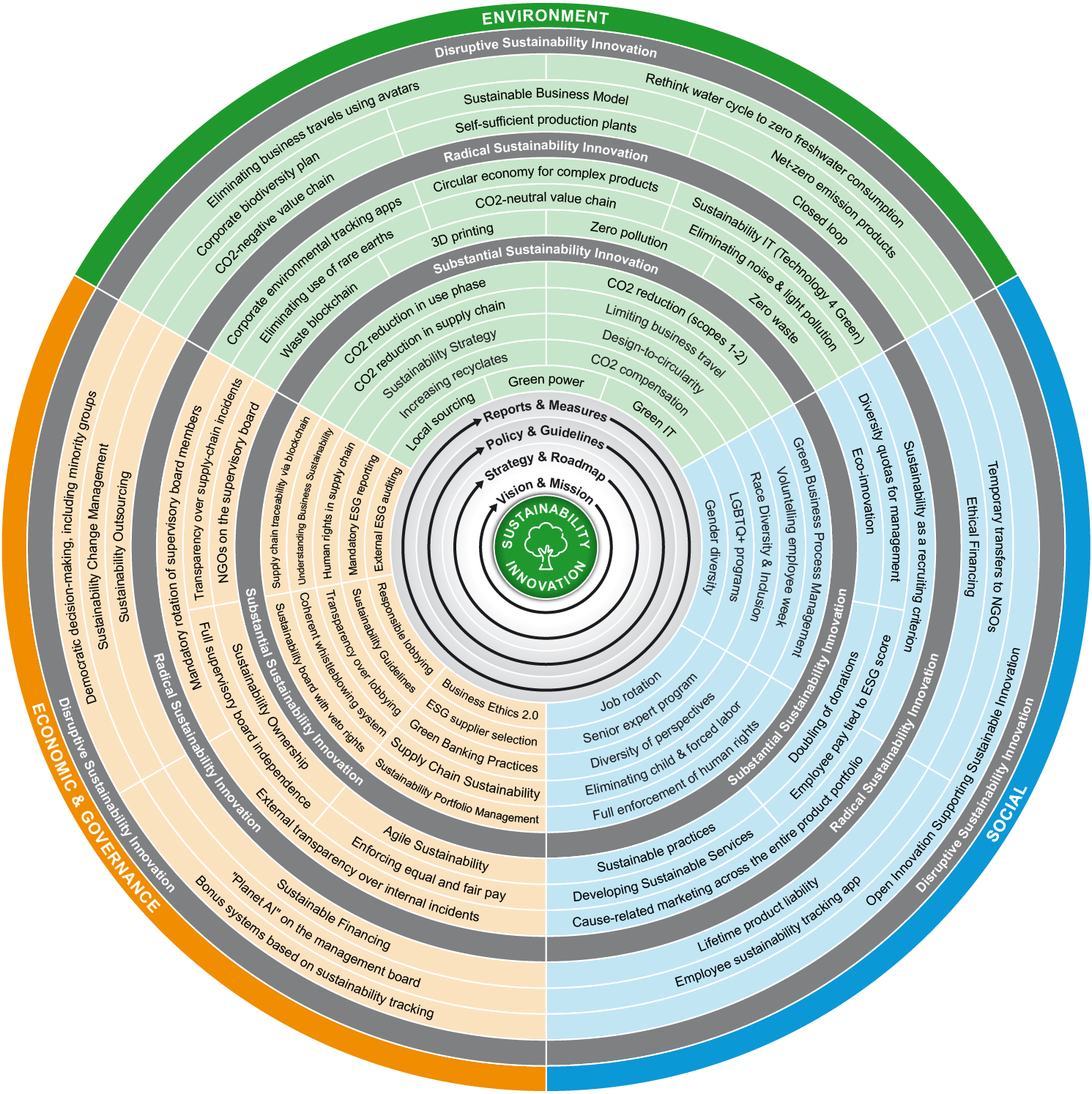
What is Corporate Governance and Sustainability Leadership?
Corporate Governance and Sustainability Leadership are essential pillars for building responsible and future-ready organizations. Corporate governance refers to the systems and principles that guide how a company is managed and held accountable. It ensures transparency, fairness, and long-term value creation through ethical decision-making and stakeholder engagement. As expectations rise from consumers, investors, and regulators, governance has evolved beyond financial oversight to include environmental and social considerations. Sustainability leadership complements this by embedding environmental, social, and governance (ESG) priorities into core business strategy.
It requires visionary leaders who champion sustainability, drive innovation, and align operations with global standards like the UN Sustainable Development Goals (SDGs). These leaders foster a culture of accountability, resilience, and responsible growth. Together, governance and sustainability leadership enable companies to mitigate risks, enhance stakeholder trust, and seize new opportunities in the green economy. By integrating these principles, businesses not only meet regulatory demands but also create long-term competitive advantage and contribute positively to society and the planet.
Main Components
The 8 Main Components of Corporate Governance and Sustainability Leadership
Effective Corporate Governance and Sustainability Leadership rely on eight key components that help organizations build ethical, accountable, and future-focused operations.
These pillars create a governance framework that integrates sustainability into strategy, culture, and decision-making, ensuring long-term impact and resilience
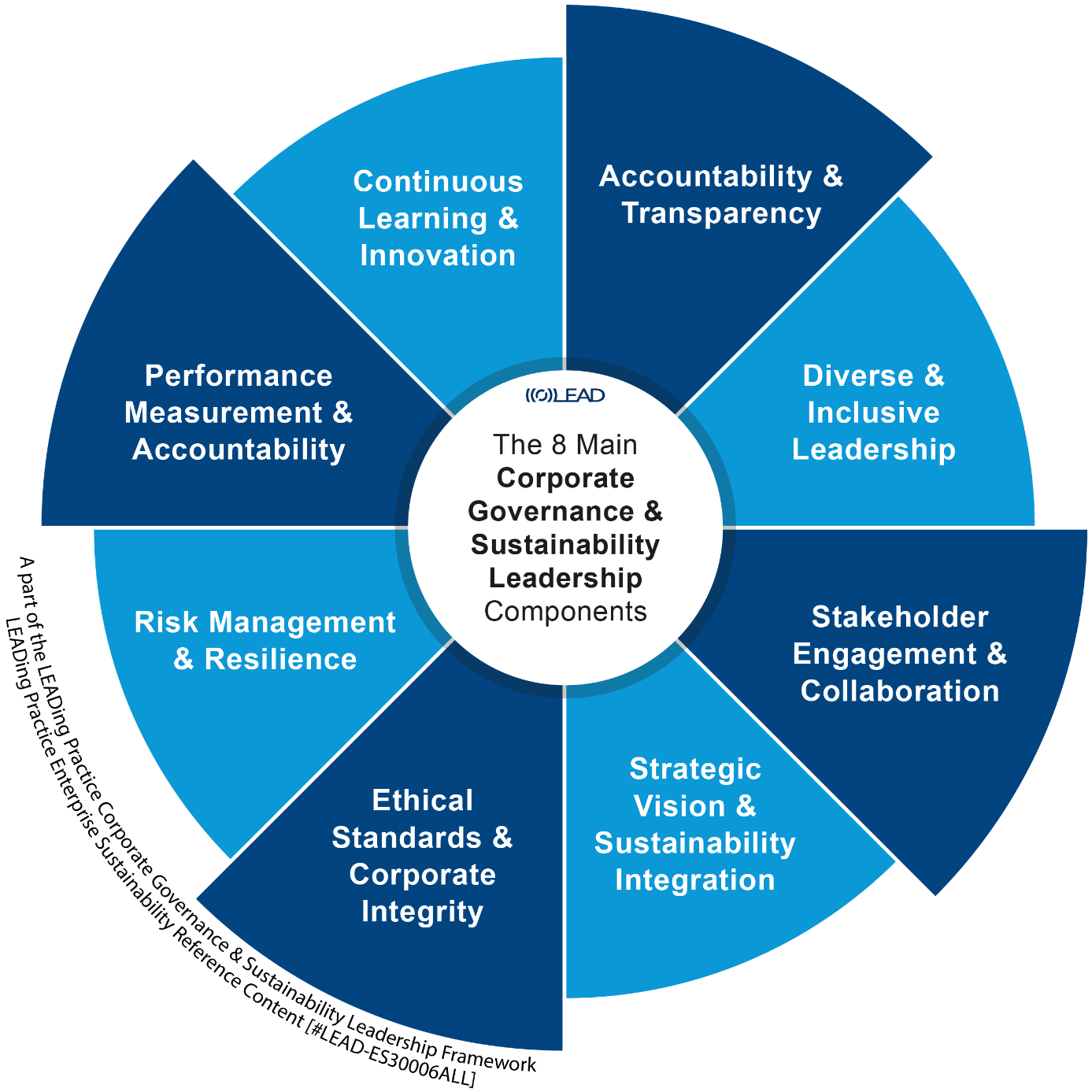
These elements form the backbone of a holistic strategy that supports human dignity while advancing sustainability goals:
Together, these components form a robust foundation for responsible leadership and sustainable business success.
They empower organizations to meet compliance requirements while driving meaningful change and long-term value creation.
Why This Is Relevant
Why is Corporate Governance and Sustainability Leadership so Relevant?
Corporate Governance and Sustainability Leadership are more relevant than ever in today’s complex and fast-changing business environment. Together, they provide the strategic and ethical foundation organizations need to operate responsibly, manage risks effectively, and create long-term value. Strong governance ensures transparent, accountable decision-making that serves the interests of all stakeholders—not just shareholders. At the same time, sustainability leadership integrates environmental, social, and governance (ESG) priorities into business strategy, driving innovation and long-term competitiveness. As global challenges like climate change, resource scarcity, and social inequality intensify, stakeholders—especially investors, regulators, and consumers—are demanding greater corporate accountability and sustainable practices.
Companies that embed ESG principles into governance structures are better positioned to manage risks, meet regulatory demands, and capitalize on opportunities in the green economy. This includes access to sustainable finance, improved brand reputation, and greater resilience against market disruptions. Moreover, businesses with strong governance and sustainability leadership are more agile and innovative, enabling them to respond to emerging trends and develop forward-looking solutions. These capabilities not only safeguard a company’s license to operate but also strengthen its ability to grow responsibly and profitably. In short, corporate governance and sustainability leadership are not just compliance tools—they are strategic imperatives for long-term success.
Business/Value Case
The Business/Value Case for Corporate Governance and Sustainability Leadership
Corporate Governance and Sustainability Leadership offer a powerful value proposition that goes beyond compliance. When sustainability is embedded into governance structures, it enhances organizational performance, strengthens stakeholder relationships, and drives long-term value creation.
These principles support financial health, build resilience, and align business goals with broader environmental and social priorities.
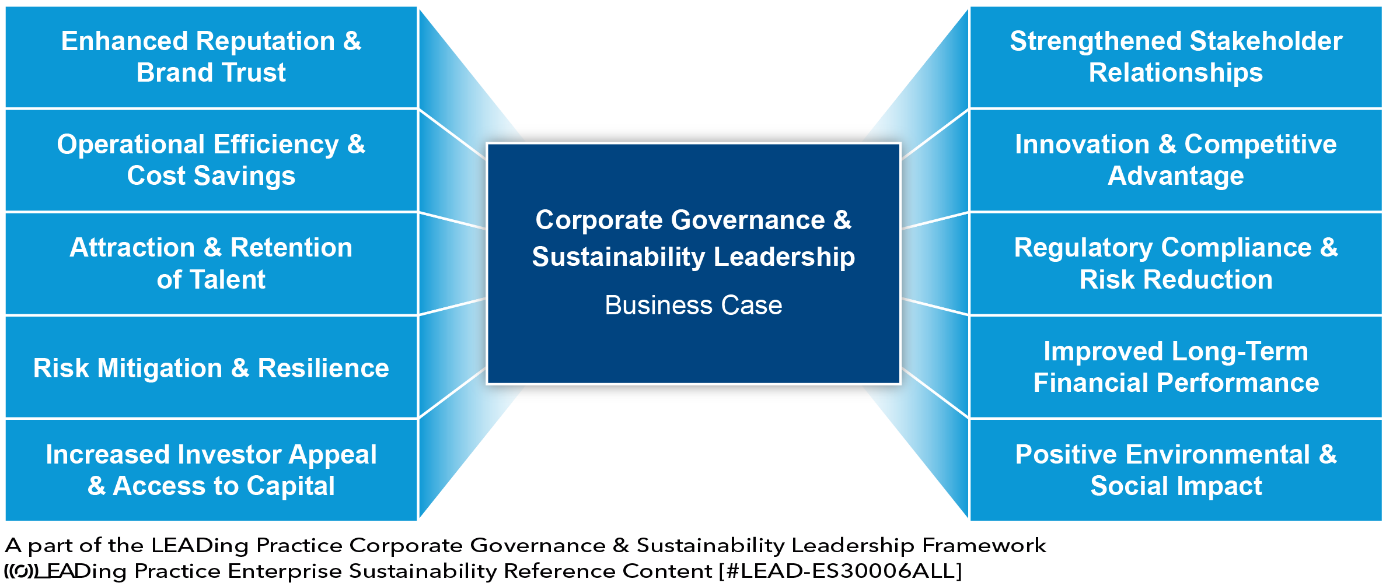
Below are ten key benefits that highlight why this approach is essential for modern organizations:
These ten benefits of Corporate Governance and Sustainability Leadership demonstrate how sustainability-focused governance creates value for diverse stakeholders, from investors to communities. By enhancing brand trust, fostering operational efficiencies, and driving innovation, organizations build a resilient foundation for long-term growth and sustainability.
This approach not only mitigates risks and ensures regulatory compliance but also amplifies positive social and environmental impacts, highlighting the value of responsible leadership. Through these advantages, organizations are better equipped to navigate a changing world, setting a strong example of corporate responsibility and sustainable success.
How-To-Guide
How-To-Guide: The Corporate Governance and Sustainability Leadership Framework
This framework offers a structured, step-by-step approach for embedding sustainability into corporate governance, promoting transparency, accountability, and alignment with long-term strategic goals.
It helps organizations meet ESG requirements while improving stakeholder trust and minimizing risks.

The 10-Step Way Forward:
Having a structured Corporate Governance and Sustainability Leadership Framework provides organizations with a clear roadmap for initiating and sustaining responsible governance . This section equips readers with the knowledge and tools to embark on their own Corporate Governance and Sustainability Leadership initiatives, helping them build sustainable practices that align with long-term strategic goals.
This approach enables quick and effective start-up of sustainability initiatives, offering transparency and accountability from the outset. By guiding teams through a series of well-defined steps, the framework empowers organizations to make informed decisions, monitor progress, and communicate results with clarity.
Contact Us
Wanna learn more ? Want to improve your company ?
Projects that require our help ?
Don't waste more time, contact us !
Most Common Pitfalls
The Most Common Pitfalls and Challenges
While governance and sustainability leadership are essential for long-term success, many organizations fall into common traps that hinder their effectiveness. Understanding these pitfalls helps avoid failure and supports the development of stronger, more integrated strategies.
Avoiding these pitfalls is key to building effective, future-ready governance and sustainability systems. Embedding sustainability into leadership, integrating it across functions, and focusing on meaningful, transparent action helps organizations stay resilient, earn trust, and create lasting value.
5 Antipattern Examples
- Sustainability as a Marketing Tool: Using sustainability solely for branding, rather than as a core business strategy, leads to shallow and ineffective actions.
- Reactive Governance: Responding only to external pressure or regulation instead of proactively planning for ESG challenges limits adaptability.
- Isolated Sustainability Teams: Keeping sustainability separate from core functions (like finance or HR) weakens its influence and integration.
- Ignoring ESG Metrics: Without tracking key indicators, companies can’t measure progress or make informed improvements.
- Compliance-Driven Approach: Focusing only on meeting minimum standards stifles innovation and prevents true leadership in sustainability.

5 Worst Practice Examples
- Lack of Leadership Commitment: Without top-level support, sustainability initiatives lack strategic direction and become fragmented.
- Inadequate Integration into Governance: When sustainability is siloed or not embedded into decision-making structures, efforts lack coherence and impact.
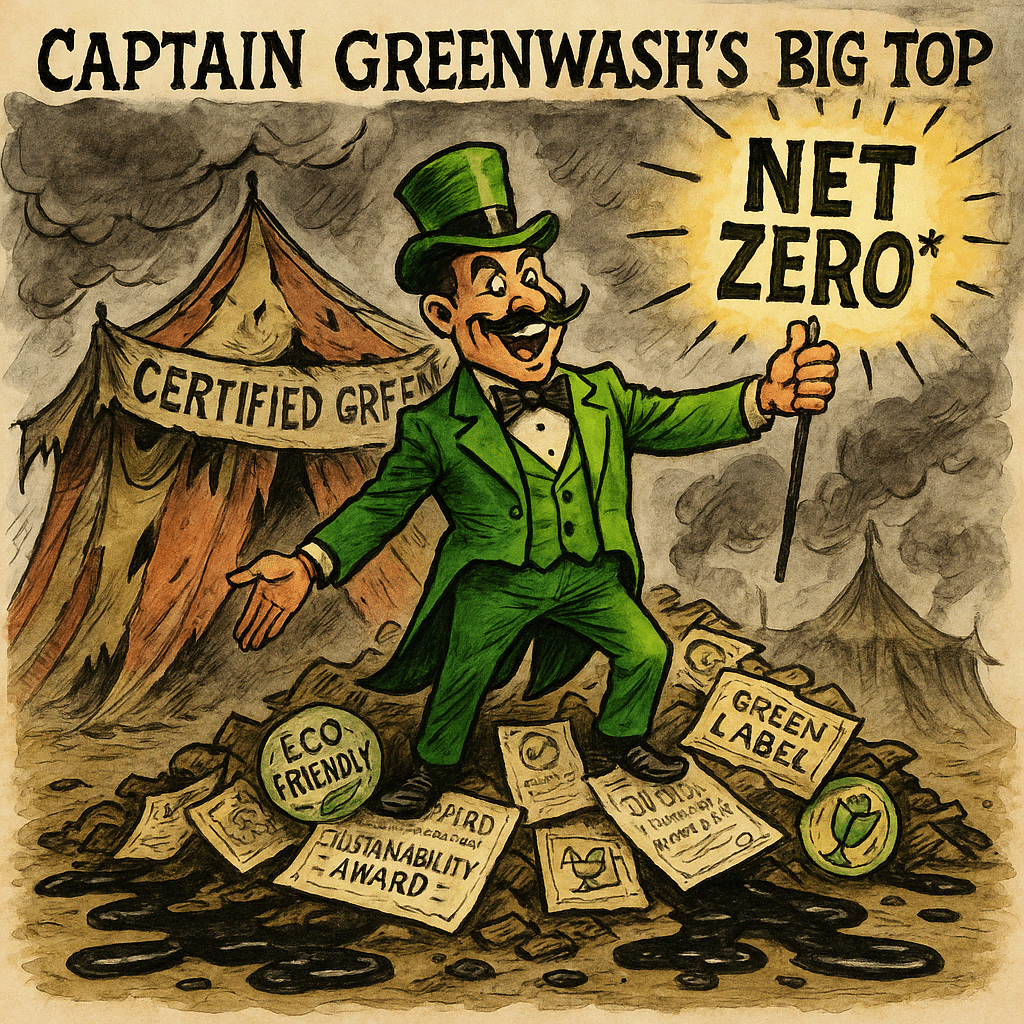
- Superficial Reporting (Greenwashing): Overstating sustainability efforts without real action erodes stakeholder trust and damages credibility.
- Failure to Engage Stakeholders: Ignoring the perspectives of employees, investors, and communities weakens sustainability outcomes and limits innovation.
- Short-Term Focus: Prioritizing short-term profits over long-term sustainability prevents investment in future-proof practices and risks long-term viability.
Lessons Learned
Learning from the Outperformers: Lessons Learned
Successfully incorporating governance and sustainability into an organization requires strategic action and learning from both best practices and the experiences of top-performing companies. These approaches align business goals with societal and environmental responsibilities, promoting long-term value creation.
By adopting these practices and learning from industry leaders, organizations can strengthen their governance structures, create sustainable value, and achieve long-term success.
5 Best Practice Examples
- Integrate Sustainability into Governance: Embed sustainability into decision-making by establishing board-level committees to oversee and guide sustainability efforts.
- Set Clear, Measurable Goals: Define realistic, time-bound sustainability targets aligned with business strategy, and regularly track progress to ensure accountability.
- Engage Stakeholders: Involve key stakeholders—such as investors, employees, and communities—in governance processes to ensure inclusive and effective outcomes.
- Ensure Transparency and Accountability: Build trust by openly reporting on sustainability goals, actions, and results, encouraging cross-industry learning and collaboration.
- Foster Continuous Improvement and Innovation: Adapt to emerging challenges by investing in R&D and pursuing innovative solutions to complex sustainability issues.

5 Leading Practice Examples
- Embed Sustainability Leadership at the Top: Appoint CSOs or board members focused on sustainability to integrate it into core strategy.
- Proactively Address ESG Risks: Anticipate and mitigate environmental, social, and governance risks before they escalate, enhancing resilience.
- Benchmark Against Industry Leaders: Compare performance with top peers to identify improvement areas and adopt best practices.
- Build a Culture of Sustainability: Encourage sustainability across all levels, empowering employees and embedding it into the organizational ethos.
- Invest in Sustainable Innovation: Prioritize innovation in technologies and business models to stay competitive and lead in sustainability.
Most Common Artefacts
The Most Common Artefacts
Successful corporate governance and sustainability leadership rely on practical tools—often called artefacts—that guide organizations in embedding sustainable practices into their operations.
These artefacts provide structured approaches to measure performance, engage stakeholders, and align sustainability with strategic goals, enabling meaningful transformation.
| Artefact | Description | How it Can Be Used for Sustainability Transformation |
|---|---|---|
| Sustainability Scorecard | A tool that tracks key sustainability performance metrics such as energy consumption, emissions, waste reduction, and social responsibility indicators. | Provides a clear, measurable framework for setting sustainability goals and tracking progress, ensuring accountability and continuous improvement. |
| ESG (Environmental, Social, Governance) Reporting Framework | A standardized approach for reporting on environmental, social, and governance (ESG) performance and risks. | Helps organizations communicate their sustainability efforts to stakeholders, improving transparency and fostering trust. |
| Stakeholder Engagement Plan | A structured approach to involve stakeholders in the decision-making process regarding sustainability initiatives. | Enhances collaboration and alignment between the company and stakeholders, leading to more informed and inclusive sustainability strategies. |
| Board Sustainability Committee | A dedicated board-level committee focused on overseeing sustainability governance and performance. | Ensures that sustainability is integrated into high-level governance, making it a strategic priority for long-term value creation. |
| Integrated Reporting Framework | A comprehensive report combining financial and sustainability performance data, presenting a holistic view of the organization's value creation. | Encourages companies to align sustainability with financial performance, fostering a more holistic approach to business and sustainability goals. |
| Sustainability Audits | Regular assessments of an organization’s environmental and social impacts, compliance with regulations, and progress toward sustainability goals. | Identifies areas of improvement and ensures that sustainability practices align with both regulatory standards and corporate objectives. |
| Carbon Footprint Calculator | A tool that measures the total greenhouse gas emissions generated by an organization’s operations and supply chain. | Supports the identification and reduction of carbon emissions, helping organizations set targets and strategies for carbon neutrality. |
| Sustainability Leadership Index | A ranking system that evaluates and compares companies based on their sustainability leadership and performance. | Provides benchmarks for sustainability excellence, encouraging companies to improve their standing through stronger governance and initiatives. |
| Sustainable Supply Chain Policy | A document that outlines the organization’s approach to ensuring that its supply chain operates sustainably, considering environmental and social impacts. | Helps organizations manage their supply chain risks, ensuring that suppliers meet sustainability standards, thus driving responsible sourcing. |
| Circular Economy Strategy | A strategic approach to designing products, services, and processes that minimize waste and maximize resource efficiency through reuse and recycling. | Promotes sustainability by reducing resource use and waste generation, contributing to a more sustainable, circular business model. |
Overview of the most common artefacts used with Corporate Governance and Sustainability Leadership.
By leveraging these common artefacts, organizations can create transparent, accountable, and effective governance systems that support sustainability.
Together, they form a comprehensive toolkit that helps companies track progress, manage risks, and foster continuous improvement on the path to sustainable success.
Conclusion
Corporate governance and sustainability leadership are essential for organizations to succeed in today’s world, where environmental and social responsibility are increasingly critical. Governance ensures accountability, transparency, and ethics, while sustainability leadership integrates long-term environmental and social goals into business strategy. Together, they help organizations manage risks, seize opportunities, and meet growing stakeholder demands. Embedding sustainability into governance frameworks allows companies to align with ESG principles, foster innovation, and contribute to societal goals like the UN’s SDGs. However, many organizations struggle by treating sustainability as an add-on, lacking leadership commitment, or failing to engage stakeholders effectively.
Learning from these common pitfalls and adopting best practices—such as setting clear goals, ensuring transparency, and fostering continuous improvement—can strengthen business resilience and impact. Practical tools like sustainability scorecards, ESG reporting, and stakeholder engagement plans help track progress and maintain focus. With the urgent challenges of climate change and social inequality, integrating corporate governance and sustainability leadership is no longer optional but vital for long-term success. Organizations that embrace these principles will better manage risks, drive innovation, and create lasting value for both shareholders and society.